Author: Site Editor Publish Time: 2026-03-30 Origin: Site
Block Production Equipment buyers now need more than higher output. The overseas procurement team is tasked to look for an improvements in the production of denser bricks and pavers which have lower cost, less noise, reduced manual handling and less space lost to pallets and curing. With the increasing demand and importance of automation, the factories will require better labor efficiency and consistent quality.

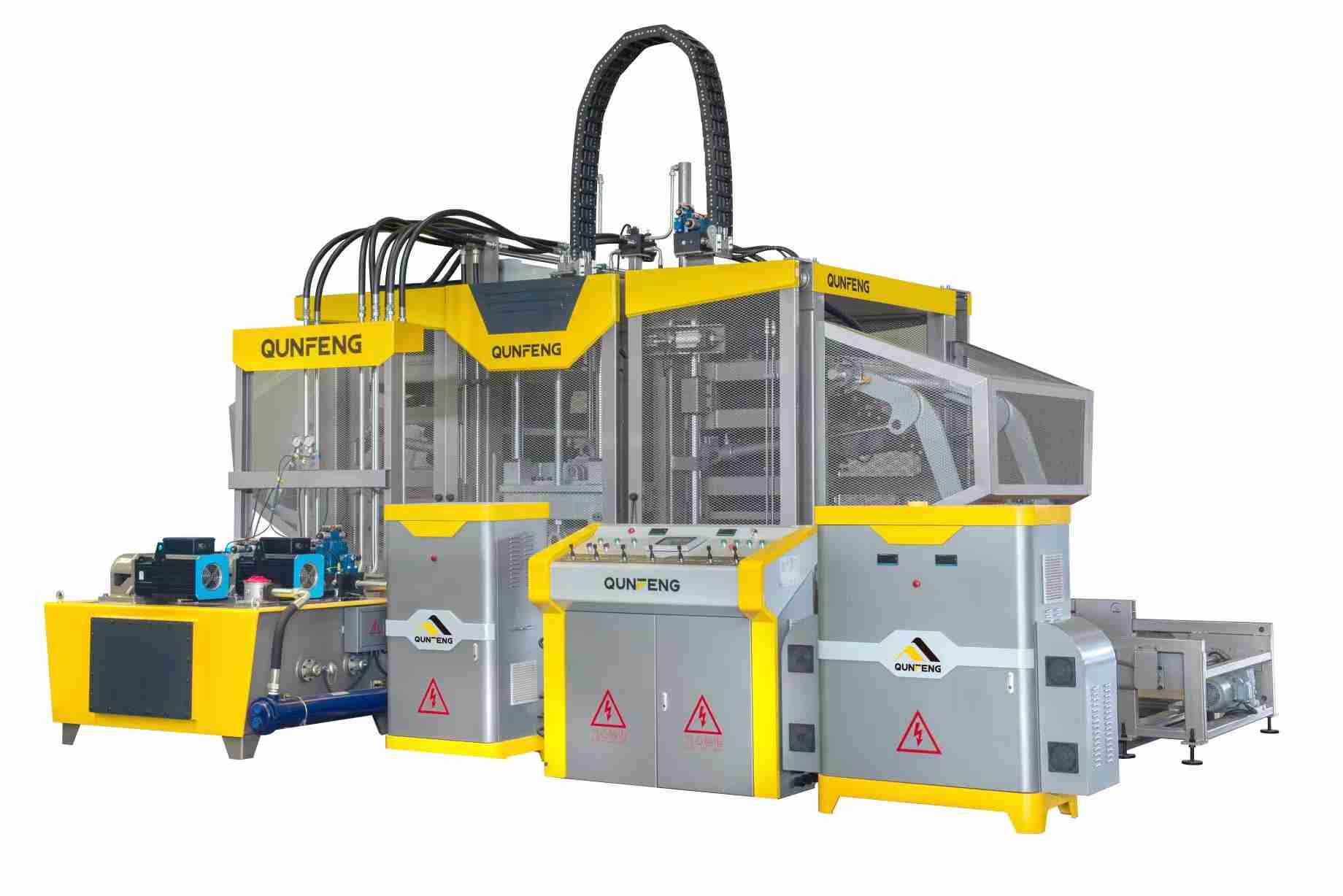
QUNFENG brings a more practical advantage to the market. With pallet-free static pressing, high-force hydraulic pressure, controlled micro-vibration, and PLC automation, QUNFENG helps mid-scale plants cut operating costs and expand into higher-value concrete products.
In many factories, traditional block lines create hidden costs that are easy to underestimate during procurement:
• Ongoing pallet purchase and replacement
• Extra handling during transfer and stacking
• More floor space occupied by pallets and curing flow
• Higher noise from conventional vibration systems
• Greater dependence on operator skill to keep filling uniform
• Limited flexibility when moving into premium pavers or terrazzo-style products
For buyers serving municipal paving, residential hardscape, industrial flooring, or decorative concrete markets, these issues directly affect margin. A machine may look economical at the purchase stage, but the real benchmark is whether it can keep density high, feeding uniform, and product quality stable without adding labor and infrastructure burden.
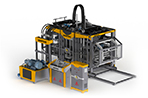
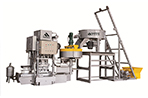
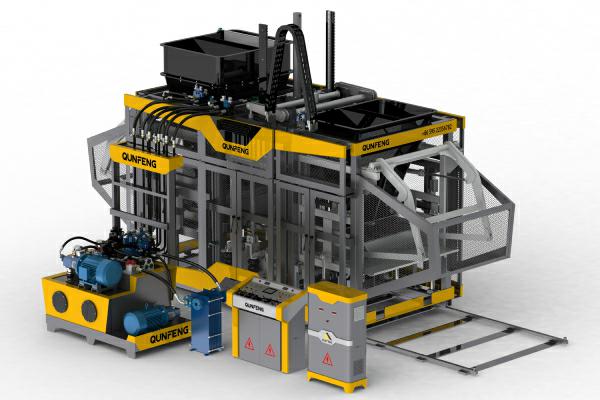
The strongest selling point of the QP600 is its board-free design combined with 600-ton static pressure. This matters because it removes one of the most persistent cost items in conventional production: pallets. That lowers entry cost for factories upgrading from older vibration-based lines and simplifies the production flow for medium-scale operations.
At the same time, the machine's 6000 KN hydraulic force supports the production of compact, high-strength concrete products that can be stacked immediately after forming. For the buyer, that means the equipment is not only making blocks. It is also helping the plant use space more efficiently and reduce dependence on pallet circulation.
From a purchasing perspective, that brings three practical advantages:
• Lower capital tied up in accessories
• No large pallet inventory is required.
• Cleaner production logistics
• Less pallet handling means fewer transfer steps and lower wear pressure around the line.
• Better fit for value-added products
• Higher compaction supports stronger pavers, solid bricks, imitation stone units, and dry PC terrazzo tiles.

The broader manufacturing direction is clear: buyers want automation, digital visibility, and better resource efficiency, not just bigger machines. Siemens positions its SIMATIC automation platform around lower costs, shorter time to market, and scalable control, while Siemens' remote access solutions also emphasize secure remote maintenance for distributed machines and plants.
That direction matches the logic behind the QP600 well. QUNFENG uses Siemens PLC control to support full automation, integrated machine-electrical-hydraulic coordination, remote monitoring, and automatic fault diagnosis. For overseas buyers, this is not a cosmetic specification. It is directly tied to easier maintenance, faster issue response, and more stable long-run production.
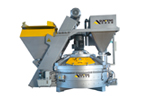
The machine also addresses another modern demand: lower noise with better feeding precision. Its vibrating table micro-vibration system and dual-motor distribution design aim to improve material spread without relying on harsher conventional vibration behavior. That is especially valuable for plants that need consistent face quality and density across pavers and architectural products.
QUNFENG positions the QP600 as a balanced investment for medium-scale high-quality brick production. Based on the official data you provided, its main technical profile includes:
• Main Pressure: 6000 KN
• Max. Cylinder Pressure: 21 MPa
• Product Height: 50–150 mm
• Molding Cycle: 20–25 s
• Power: 69 kW
• Machine Dimension: 6510 × 2400 × 4800 mm
For buyers, those figures point to a machine designed for practical versatility rather than oversized complexity. The 50–150 mm product-height range fits many core concrete products. The 20–25 second molding cycle supports competitive output for medium-scale plants. The 69 kW power configuration also helps position the machine as a more economical hydraulic option compared with larger heavy-duty systems.
Just as important, the QP600 is not restricted to one simple SKU. It can support:
• High-density solid bricks
• Concrete pavers
• Imitation stone bricks
• Slope protection bricks
• Dry PC terrazzo tiles
• Other specialized concrete products within its forming range
That multi-product adaptability matters in today's market because product mix is becoming more important than pure volume. Demand is no longer limited to standard units. In parallel, segments such as permeable concrete are also gaining attention as stormwater management and low-impact development requirements grow in many markets. Mordor Intelligence projects the pervious concrete market to rise from USD 5.46 billion in 2026 to USD 7.45 billion by 2031.
When comparing block production equipment, buyers should look beyond brochure output claims and ask more operational questions:
• Does the machine reduce recurring accessory cost?
• Can it support higher-margin product categories?
• Is the control system based on a recognized automation platform?
• Will the feeding system keep density uniform across the mold area?
• Can the equipment fit a medium factory without excessive footprint pressure?
• Does the production logic reduce noise and operator dependence?
The QP600 answers these questions in a commercially sensible way. Its value is not based on being the largest machine in the market. Its value comes from combining pallet-free production, static pressing strength, automation, and product flexibility into one platform that suits real factory economics.
For many procurement teams, the best machine is no longer the one with the most aggressive marketing language. It is the one that solves a clear operational problem. In this case, that problem is the cost and inefficiency of conventional pallet-dependent production when buyers also need stronger products and more flexible output.
QUNFENG's QP600 fits the direction modern manufacturers are moving toward: more automation, better resource control, lower production friction, and broader product capability. As construction materials and precast demand continue to expand, buyers that invest in equipment with stronger cost logic and better upgrade potential will be in a better position to protect margins and compete for higher-value orders.