Author: Site Editor Publish Time: 2026-03-09 Origin: Site
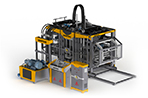
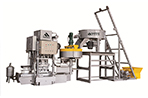
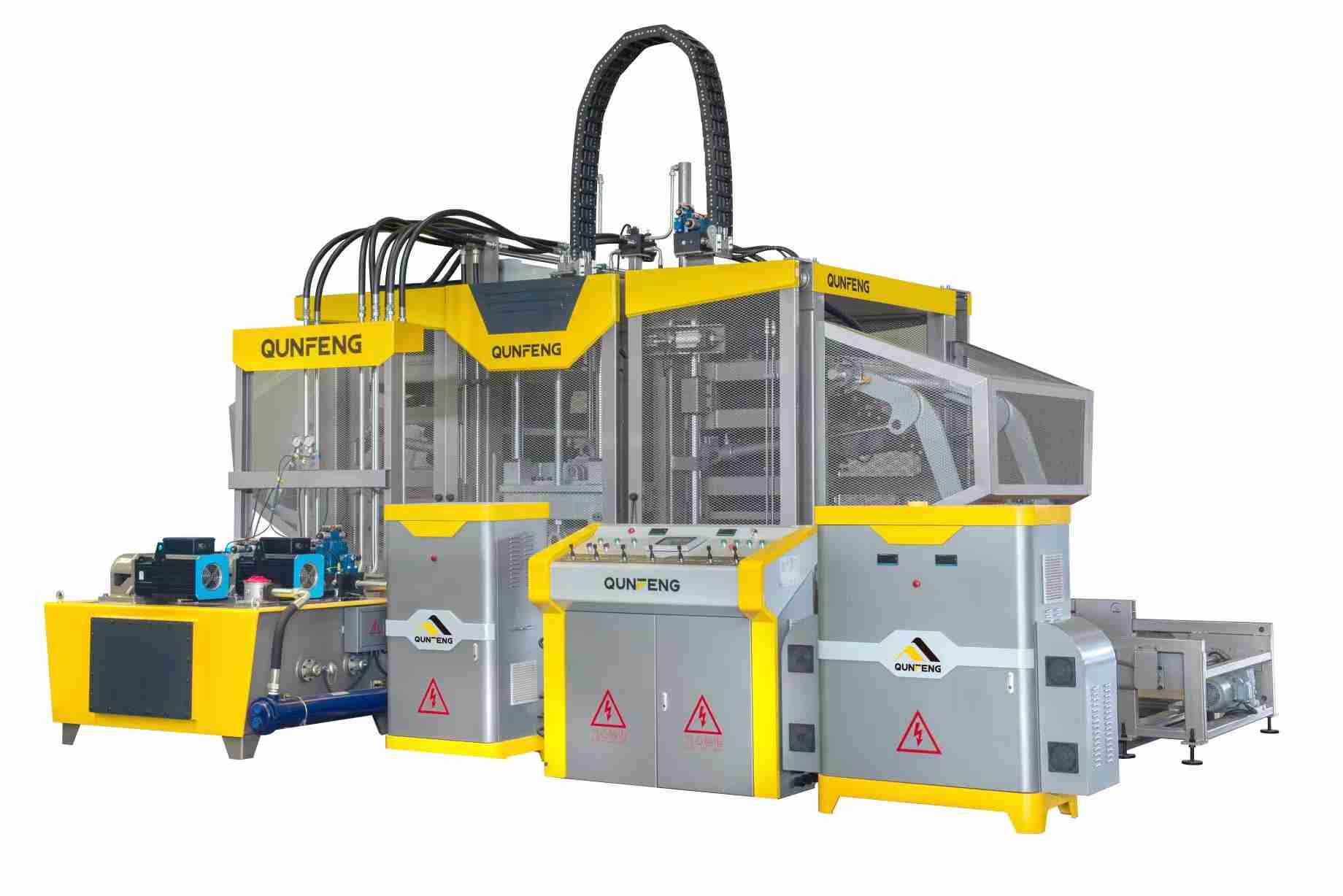
Concrete Block Press Machine selection becomes much easier when buyers focus on one core question: How do you create high-density bricks that stay consistent across thousands of cycles? In QUNFENG’s view, density is not a "nice-to-have." It is the foundation for strength stability, stackability, and predictable curing. That is why the QP900 is built around a clear engineering center: 900T (9000 kN) bidirectional static pressing, designed to compact material evenly from both directions and deliver repeatable high-density results in real factory conditions.

Many machines can claim high tonnage, but the direction and balance of force matter just as much as the peak number. On a typical line, a one-way press can create density gradients—more compaction near the force source and less in the opposite zone—especially when the mix contains recycled content or moisture differences. Over time, this can show up as corner chips, uneven edges, or inconsistent strength between batches.
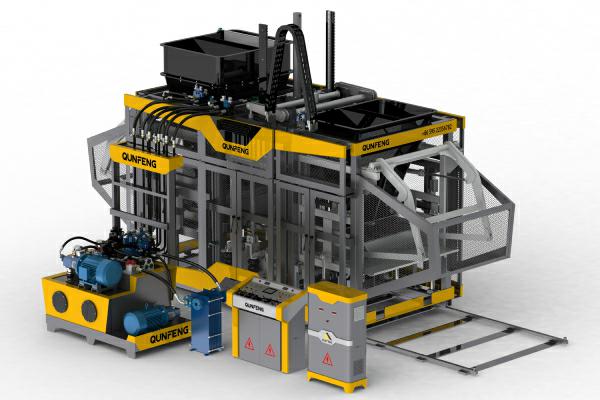
The QP900 uses a coordinated pressing method where the main oil cylinder and demoulding cylinder operate in sync to create equivalent two-way pressurization. In practical terms, the material is compacted from the top and bottom like a "sandwich" press. The result is not just higher force, but more balanced force distribution. For buyers comparing a Concrete Block Press Machine, this is where real quality stability begins.
✓ More uniform density across the full brick body
✓ Lower risk of weak zones that cause breakage in handling
✓ Better repeatability when materials and operators change
High-density bricks are valuable only if they remain stable after demoulding and during transport inside the plant. In real production, the weak moment is the transition from "pressed" to "handled." If compaction is uneven, bricks can deform slightly, crack at stress points, or lose edge definition when stacked. That is why QUNFENG focuses on a pressing outcome that supports immediate downstream reliability.
With 900T bidirectional static pressure, the QP900 produces bricks with stronger internal cohesion and cleaner geometry. This is the practical reason QUNFENG highlights "immediately stackable for curing" performance: when compaction is balanced and sufficient, bricks hold their shape earlier and tolerate stacking forces better. For operations teams, this can translate into fewer rejects, fewer interruptions, and more confidence in shipping-ready packs.
Instead of relying on extra waiting time or overly cautious handling, a Concrete Block Press Machine with stable two-way compaction helps the line move with a smoother rhythm—press, demould, stack, cure—without constant correction.
In 2026 projects, many plants are blending multiple inputs—quarry aggregates, reclaimed fines, and sometimes industrial solid waste—to control cost and support sustainability requirements. The challenge is that recycled content often introduces variability in particle shape, moisture behavior, and compaction response. When force is insufficient or poorly distributed, variability becomes product inconsistency.
The QP900’s 9000 kN (900 tons) bidirectional force is designed to create a wider "process safety margin." This does not mean you should ignore material preparation. It means the press can deliver robust compaction even when the mix is not perfectly ideal every day. In buyer terms, stronger and more balanced pressing reduces the penalty you usually pay for raw material fluctuations.
✓ Better compaction tolerance for mixed aggregates and recycled blends
✓ More stable density when moisture shifts within a controlled range
✓ Higher confidence in batch-to-batch uniformity

Factories need output, but speed without density control becomes expensive. A high-capacity Concrete Block Press Machine should keep its compaction logic stable at industrial rhythm. QUNFENG data indicates the QP900 operates with a 15–17 second cycle time, which reflects not only mechanical speed but also hydraulic coordination. The key point is not chasing the shortest cycle possible, but maintaining a cycle that repeats with stable pressing behavior.
For standard solid brick production, QUNFENG lists 39 pieces per cycle (example size 240 × 53 × 115 mm). Buyers should treat this as a capacity reference that helps model planning. The deeper message is that two-way pressurization supports a smoother density outcome even when the machine runs fast, because the force path is designed to remain balanced cycle after cycle.
✓ 15–17 s cycle time supports high-volume planning without sacrificing compaction stability
✓ 39 pcs/cycle reference helps estimate manpower, curing space, and logistics flow
✓ Stable rhythm reduces rework caused by density variation
A strong press is only as reliable as its control system. In high-tonnage work, small control deviations can turn into visible product variation. QUNFENG pairs the bidirectional force structure with closed-loop servo control, using servo proportional valves and linear displacement sensors to manage pressure and position precisely. This improves response speed and anti-interference behavior, which is important when the line runs in long shifts and environmental conditions change.
The QP900 also uses a constant power variable pump that adjusts output based on actual working conditions. According to QUNFENG reference data, this approach can help reduce energy consumption by up to 30% under suitable conditions. For plant owners, the practical meaning is that the machine can deliver high compaction without operating as an "energy brute force" system all day.
A Concrete Block Press Machine should create density with control, not with waste. That is the long-term advantage of combining 900T pressing with intelligent hydraulic management.
When you evaluate a Concrete Block Press Machine for high-density bricks, it helps to translate engineering terms into procurement checkpoints. Bidirectional pressing is valuable because it turns high tonnage into consistent compaction, and consistent compaction reduces hidden costs. Before you decide, verify the outcome logic in the context of your own plant:
✓ Density uniformity: ask how two-way pressurization is achieved and how it stays consistent across molds.
✓ Stackability: confirm whether bricks can be handled and stacked reliably after demoulding under your planned workflow.
✓ Material adaptability: review expected raw materials and confirm the press has enough compaction margin for variability.
✓ Operating cost logic: focus on energy behavior and maintenance rhythm, not only peak tonnage.
If your 2026 plan requires high-density solid bricks and you are comparing options for a Concrete Block Press Machine, contact QUNFENG with your target brick specifications, raw material mix (including any recycled or solid waste content), and daily output goal. We will recommend a practical QP900 configuration, explain how 900T bidirectional pressing supports uniform density and stable stackability, and provide a manufacturing-ready quotation path for dependable project delivery.