Author: Site Editor Publish Time: 2026-01-05 Origin: Site
❓ Why the Concrete Blocks Production Line Matters Today?
Instead of being treated as an isolated machine, a modern Concrete Blocks Production Line now serves as the plant's primary performance driver, defining its ability to produce uniform, high-strength blocks day after day. Contractors expect every pallet to arrive with clean faces, accurate dimensions, and reliable performance on site.

Producers, meanwhile, face rising labor costs, stricter standards, and tight delivery windows. When batching, mixing, forming, curing, and packaging are still run as separate islands, density and color drift, stoppages increase, and scrap grows. An integrated Concrete Blocks Production Line links all stages under one control strategy, so raw materials and energy are converted into predictable, repeatable output instead of constant crisis management.
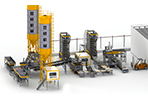
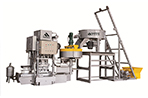
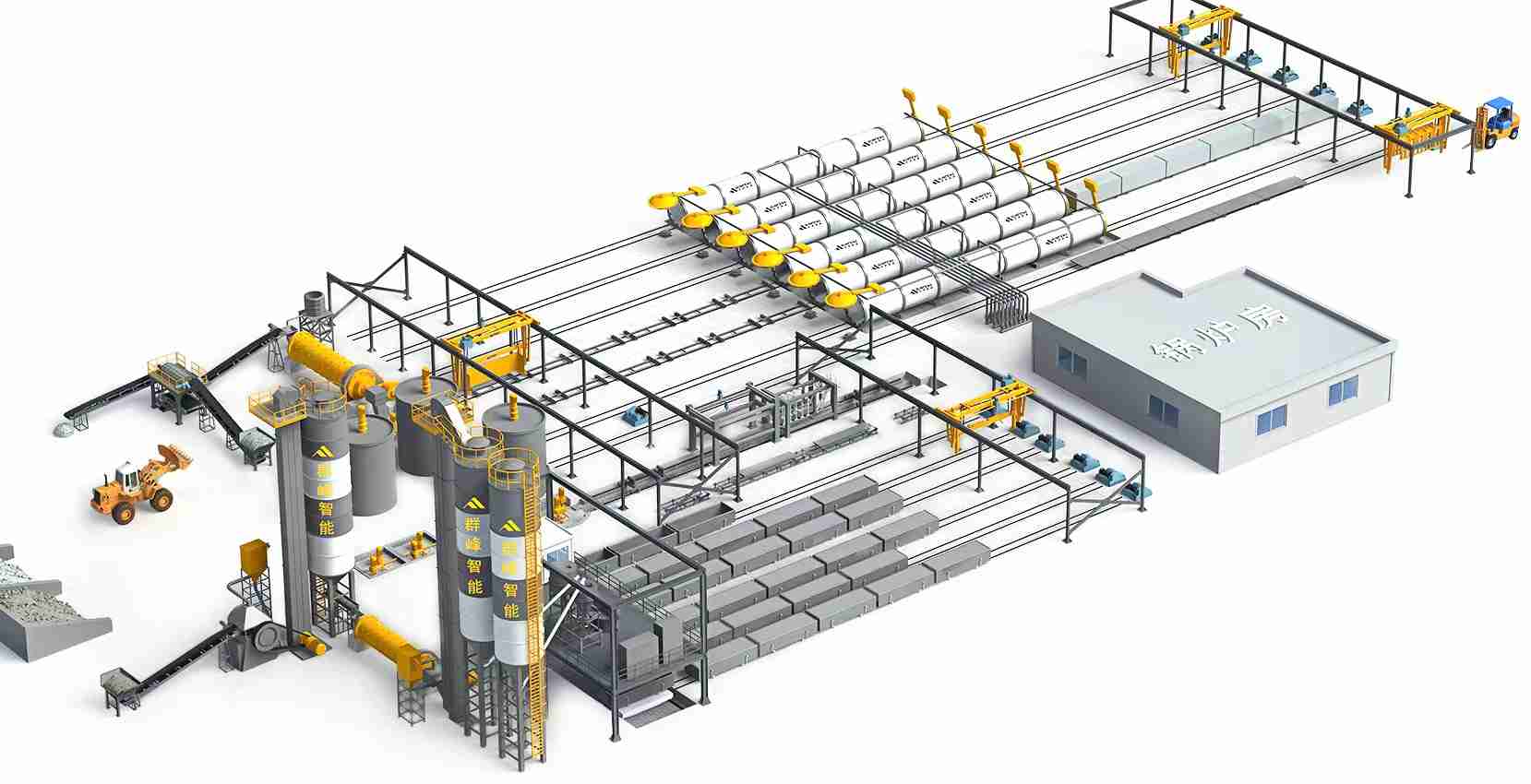
A true Concrete Blocks Production Line is a complete production system, not just a press plus molds. It starts at the raw material silos and ends in the finished goods yard, with each step measured and traceable. Core functions include storage and precise dosing of cement, aggregates, water, and admixtures, mixing and controlled distribution of fresh concrete, block forming with consistent filling, vibration, and pressing, and finally curing, handling, cubing, and transfer to storage and dispatch.
The line is designed to keep productivity high while protecting quality and reducing dependence on a few expert operators. On one platform, the same Concrete Blocks Production Line can produce solid and hollow blocks, permeable pavers, imitation stone PC bricks, and curbstones for municipal and landscaping projects.
For a Concrete Blocks Production Line, system performance depends less on individual machines and more on how each stage links to the next.
• Raw material handling and batching
Materials such as aggregates, cement, and fines are stored in dedicated silos or bins before being dosed into weighing systems. High-accuracy batching stabilizes mix quality, lowers the risk of cracks, and helps prevent early block failures.
• Mixing technology
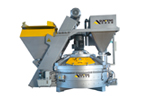
Efficient mixers create a uniform, workable concrete that fills the mold completely and responds well to vibration. Poor mixing shows up later as soft edges, rough surfaces, and uneven water absorption.

• Block machine and molds
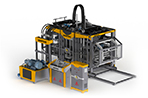
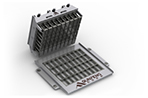
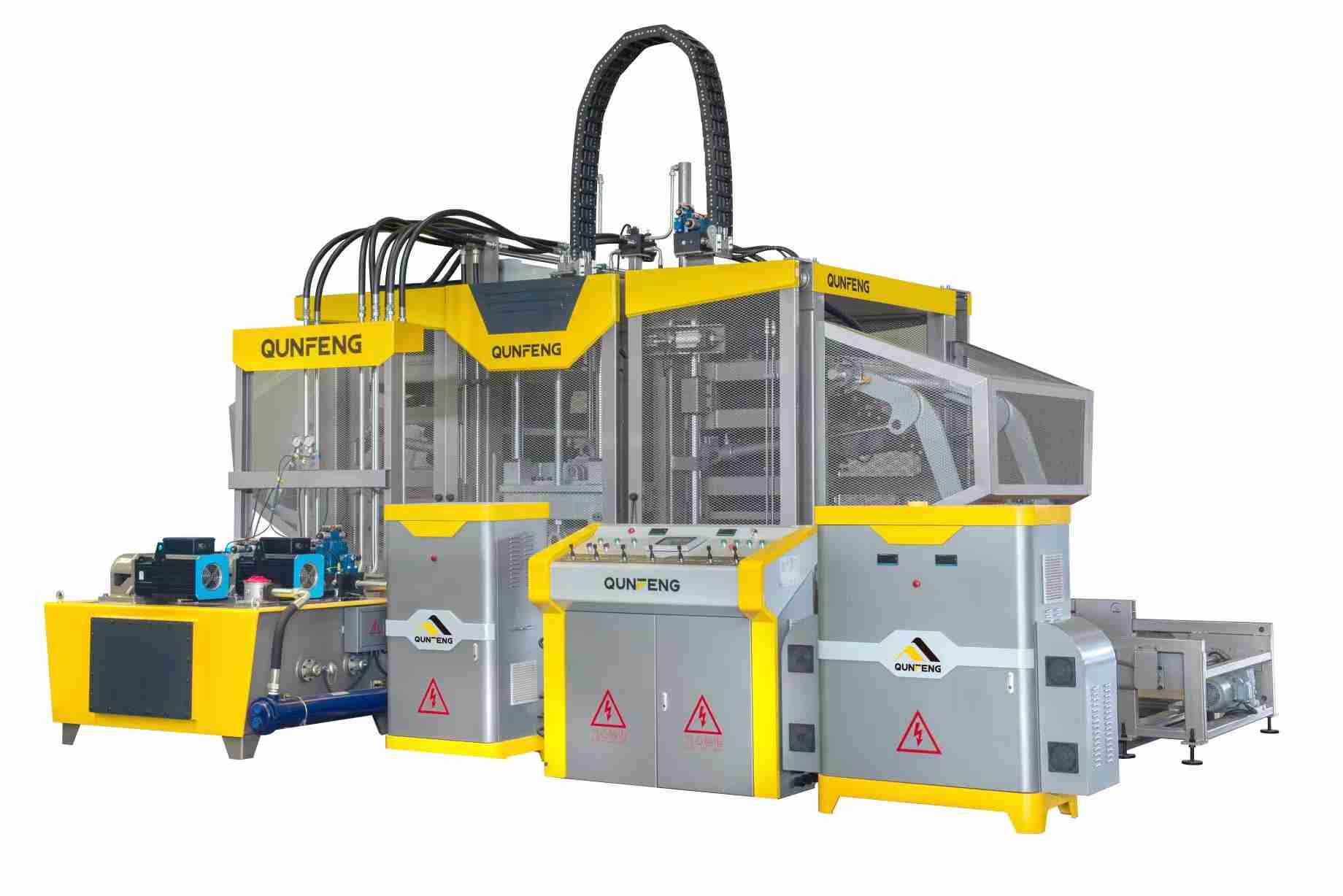
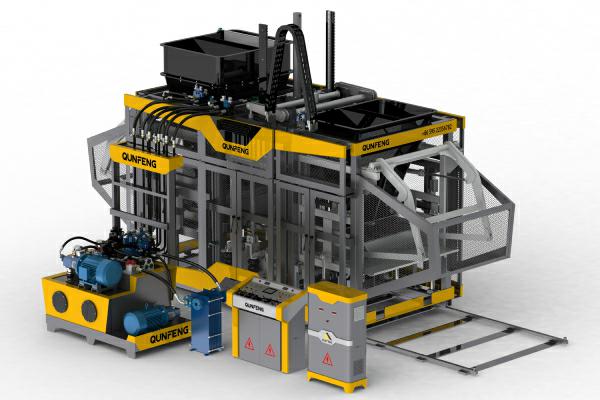
The forming section is the visible heart of the line. Compaction, edge sharpness, and surface finish depend on vibration settings, pressing force, mold quality, and frame rigidity. A stiff frame and precise mold guidance extend mold life and help control tooling costs.
• Curing and handling
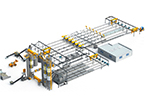
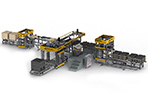
Products may be cured on racks, in chambers, or in high-level kilns. Curing conditions control early strength, durability, and appearance; even an excellent mix cannot compensate for poor curing. Automated conveyors, finger cars, and cubers move green and cured products with minimal forklift use, protecting edges and keeping the machine supplied with pallets.
In daily operation, the sequence is straightforward. Raw materials are weighed according to the selected recipe and fed into the mixer. The fresh concrete goes to the block machine hopper, fills the mold, is compacted by vibration and pressure, and is demolded onto pallets. Green blocks travel automatically to the curing area. After the defined curing cycle, hardened products are cubed, strapped or wrapped, and moved to finished goods storage. A central control system keeps batching, mixing, forming, and curing in balance so that no section becomes a bottleneck.
For manufacturers, a Concrete Blocks Production Line must prove itself in daily operation. Critical KPIs cover saleable production per hour and per shift, accuracy of block size, consistency of compressive strength, downtime and service intervals, plus energy and labor productivity.
Blocks that are rejected or never leave the curing area do not contribute to plant capacity. When breakdowns are common or operators must constantly intervene, profits fall - and setups that depend on large teams or high power spikes are especially exposed in a high-cost environment. When these factors are optimized, cost per block falls and the plant gains resilience against market changes.

n Automation, Control, and Raw Material Flexibility
Automation level is a major differentiator. Manual and semi-automatic setups rely heavily on operator skill, so quality can drift whenever key staff are absent. A fully automatic Concrete Blocks Production Line uses centralized control with recipe management and sensor feedback. Mix proportions, water dosage, vibration profiles, filling heights, and curing curves are stored as digital recipes; to move from hollow blocks to decorative pavers, operators simply select a new recipe, and the system adjusts setpoints across batching, mixing, forming, and curing.
At the same time, the line must cope with variable raw materials. Natural aggregates change in moisture and grading, while industrial by-products such as slag or fly ash may vary in fineness. A robust Concrete Blocks Production Line provides protected storage, accurate weighing with moisture compensation where needed, and easy adjustment of mix, vibration, and curing parameters. Small recipe tweaks can be made while the line runs, helping maintain quality even as material properties shift.
n Long-Term Economics and Strategic Value
Although a fully automatic Concrete Blocks Production Line requires higher initial investment, it usually delivers lower labor costs, less scrap, and better use of secondary raw materials over its service life. More saleable blocks per shift spread fixed overheads across a larger volume, lowering the real cost per block. Because the line operates as a scalable platform, producers can later add molds, expand curing capacity, or introduce new product types without replacing core equipment. In competitive markets where customer expectations keep rising, that flexibility becomes a long-term strategic advantage.
In modern concrete manufacturing, success is defined by how well the entire Concrete Blocks Production Line performs as a coordinated system. When material handling, batching, mixing, forming, curing, and automation are designed to support one another, producers gain stable quality, broader product capability, and lower operating costs.
Treating the line as a long-term investment rather than a loose collection of machines helps block manufacturers deliver today's orders while staying ready for future changes in products, standards, and market demands.