Author: Site Editor Publish Time: 2026-08-25 Origin: Site
When all the operations are running simultaneously, a fully automatic concrete block making machine can be impressive. The mixer is fed by time, the wet blocks are fed out of the press, the pallets move round and the finished products come to the cuber with minimum handling.

The difficulty is a true automatic plant is only as fast as the slowest part of the plant.
The actual investment choice for a producer who is striving to go beyond semi-automatic production isn't necessarily just about buying which press. It's the way the batching, molding, wet-side handling, curing, dry-side handling and control will tie together into one system.
Where is “Fully Automatic” really, fully automatic?
However, it is not beneficial to automate one operation if workers are still required to manually stop the line to move pallets back and forth, or reorganize wet blocks or feed the next process.
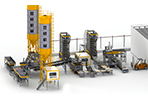
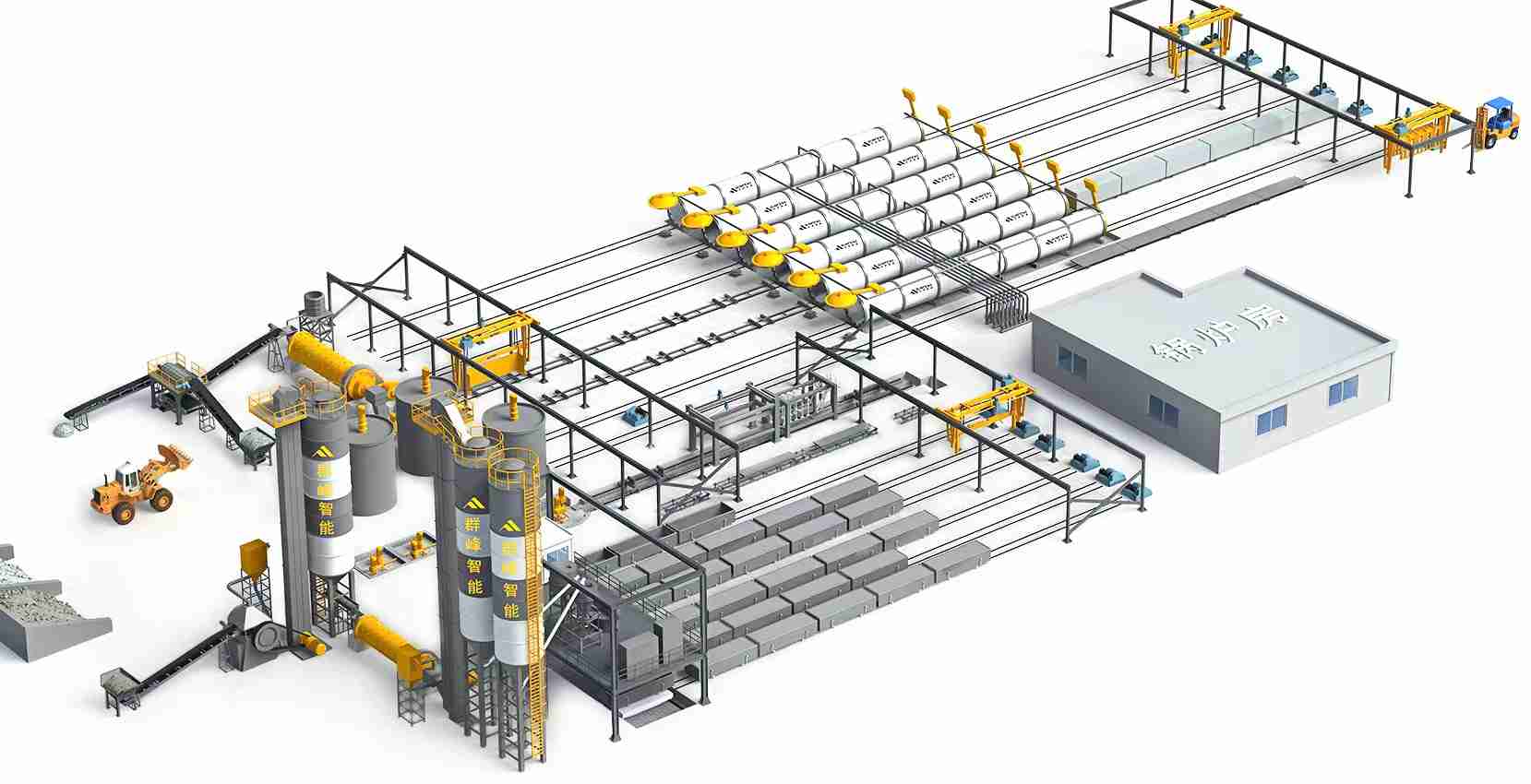
Normally, there is a practical fully automatic line that includes the following processes: raw material batching, mixing, block forming, pallet transporting, curing logistics, block lowering, cubing and pallet return.
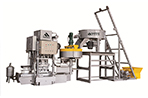
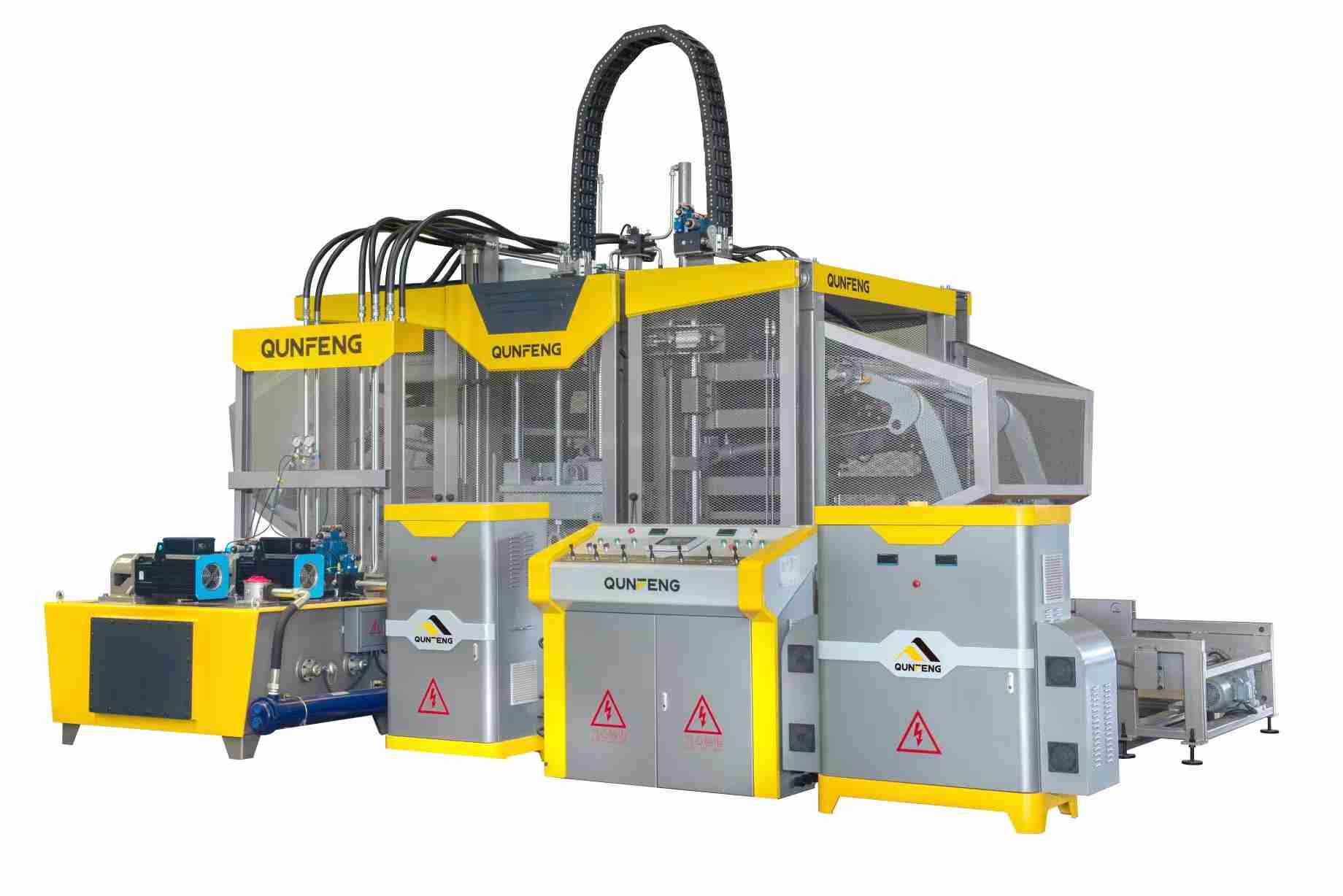
Qunfeng's fully automatic block production line with curing rack integrates the block machine, elevator, conveying equipment of curing-rack, lowerator and cuber and circulation conveying equipment. This is much more like what should be the factory owners' thoughts when talking about “full automation.”
Use the Watch function to watch the handoffs between machines.
The troubles in the line generally occur between the machines not in the machines themselves.

Mixer can be completed before the molding machine. When pallets are wet, they may build up before curing. Cured products come in different quantities so the cuber can have to wait.
Such handoffs should be considered in the layout planning process. The speed of conveyors, the time for pallet buffers, and the sequence of transfers should allow one section time to get caught up before halting everything behind it.
It's easy to overlook on a quotation but operators will soon pick up on that after commissioning.
Handoff Point | What to Observe | Warning Sign |
Mixer → Block Machine | Material arrives on demand | Machine waits for mix |
Press → Elevator | Wet pallets leave continuously | Pallets accumulate |
Elevator → Curing | Rack availability | Transfer queue |
Curing → Lowerator | Balanced product release | Irregular batches |
Lowerator → Cuber | Stable block supply | Cuber frequently idle |
Cuber → Storage | Clear forklift route | Finished cubes block line |
The Press Still Sets the Rhythm, the most recent of the two, was composed during the 1950s.
When the surrounding equipment is able to follow, the machine to block becomes the heart of the line.
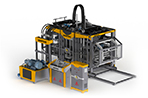
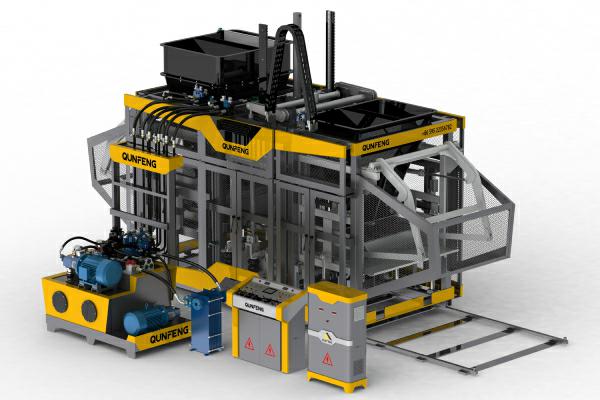
In the case of large commercial plant, the amount of material that can be productively processed by the line is determined by the mold area, cycle time, vibration response and feeding consistency. Qunfeng QS1300 automatic block machine is a servo vibration type machine, which is installed to prepare large-size blocks and pavers. It publishes capacity which also depends on the brick size, as an important reminder, one capacity may not describe each product.
Please request production quotes with the hollow block, paver or curbstone you are going to sell.
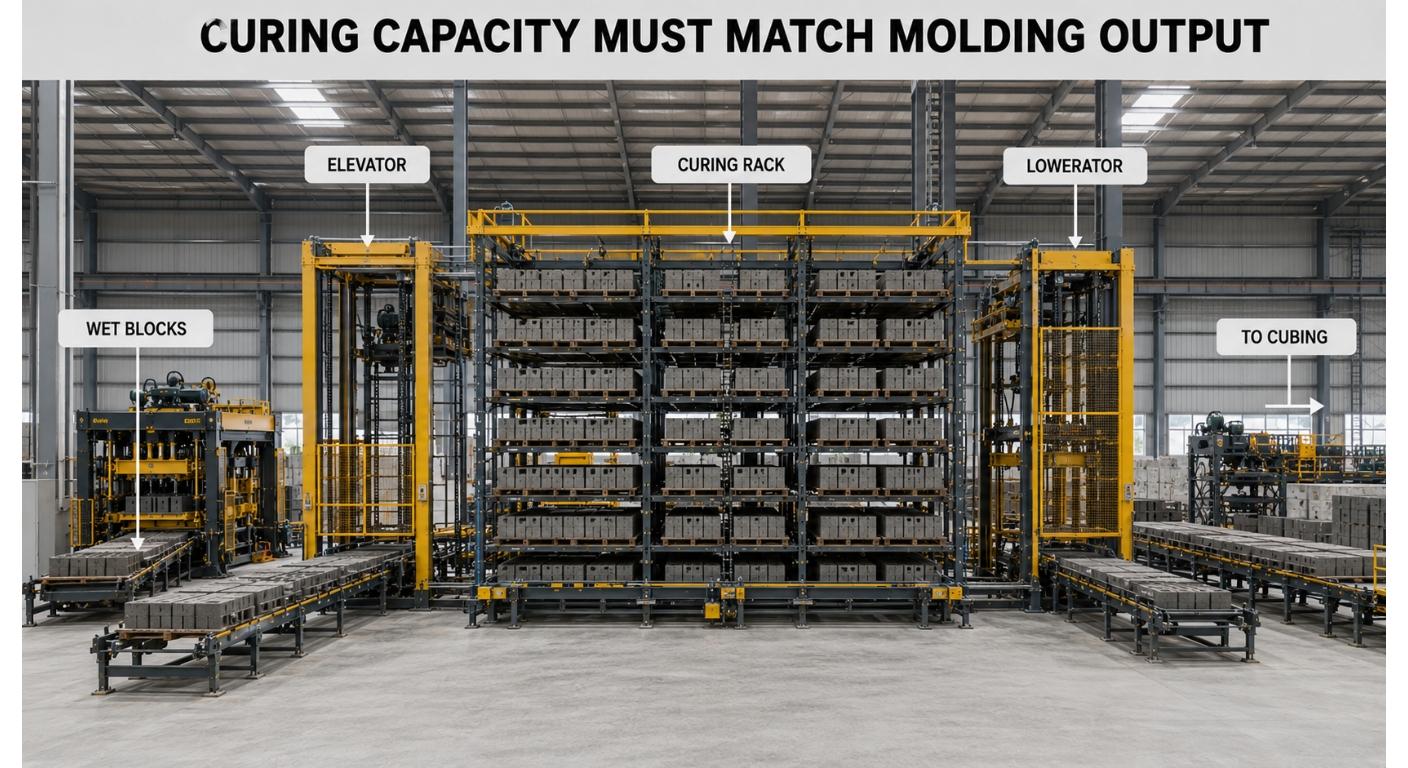
Curing can be the silent killer.
The fresh blocks are not the end-product that can just be stacked. Need to be handled in a controlled manner until they are sufficiently strong.
As the press's capacity increases, so must the curing area. Otherwise, operators are waiting for the racks, manually handling the products or decreasing the molding speed.
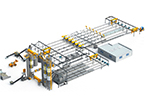
Vertical arrangement of curing-racks takes up space without separating wet products. Rather than curing being just a warehouse process, Qunfeng's automated rack line integrates with the upstream and downstream equipment, ensuring the efficient transport of curing operations.
Curing logistics should be considered simultaneously with the block machine design, if the plant is a high-output plant.
Automation made visible by Cubing!
Many older lines may already have an automatic press, but to date, the finished blocks are still manually processed.
That makes a labor intensive dry-side.
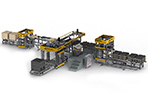
An automatic cuber takes the cured products, sorts layers and forms blocks for further downstream storage or packaging. The benefit isn't just to take one operator out of the mix. Also, finished-product storage can be more easily organized and forklift movement is more consistent with more consistent stacking.
Partially this is a reason for considering a fully automatic plant raw material to finished cube, rather than mixer to press.
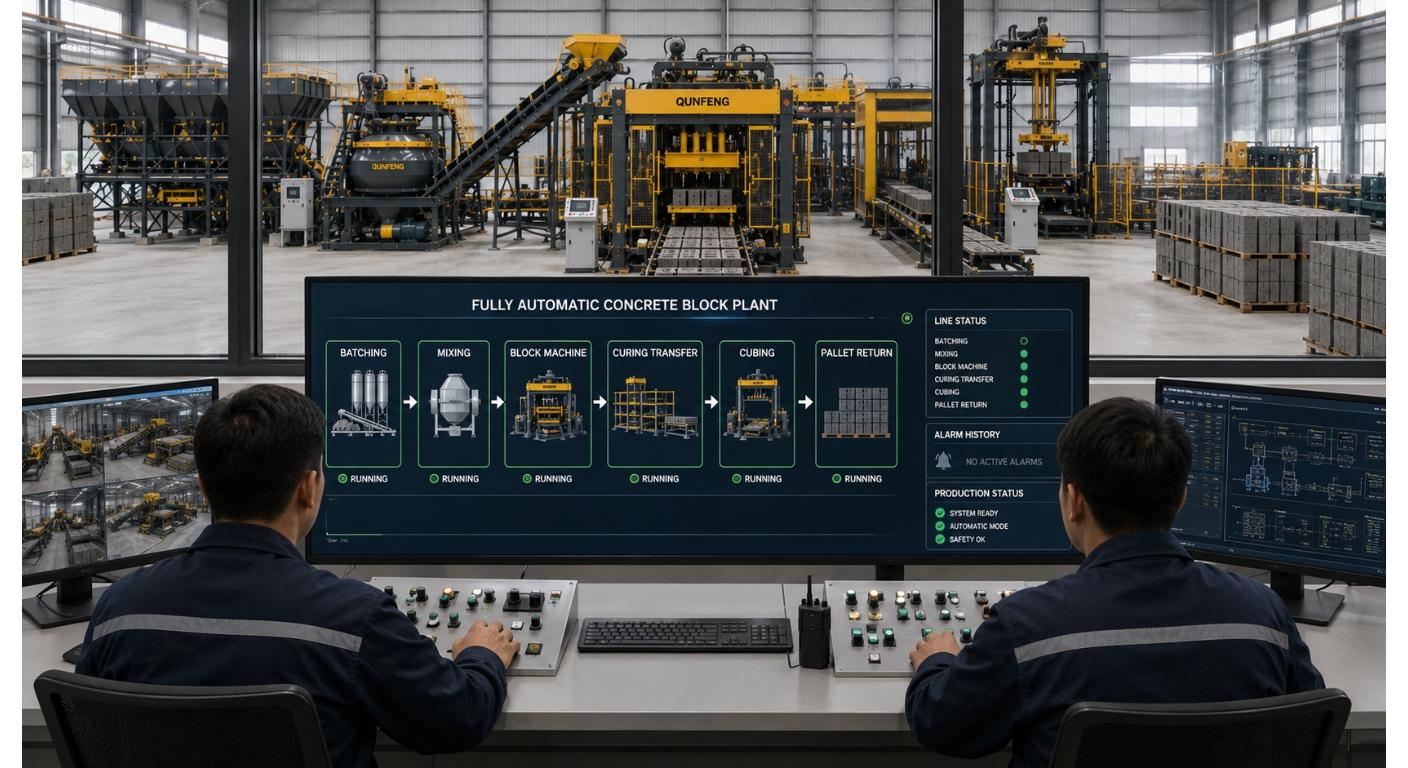
Problems should be made easier to find by Central Control.
The more automation, the more sensors, more motors and more transfer sequences. Maintenance staff should be able to determine the source of the interruption when the something stops.
Central control can be of benefit when operators need to view operating status, alarms and process sequences, rather than having to walk around the line to find out where the first machine is stopped.
There must be less guesswork involved in automation.
This is important especially if a factory has a long shift. It can make more difference to the molding process if it is interrupted for 5 minutes several times a day than to have a small difference in theoretical molding speed.
Avoid over-automating up to the point of maintenance!
With full automation there is another side as well.
Individuals are needed to inspect, maintain an inventory of parts, and properly respond to alarm calls for servo drives, PLC controls, sensors, conveyors and automatic handling equipment. It is important to remember that the most complex configuration possible should not be selected for a factory just because it is available.
Qunfeng's block production solutions demonstrate various block production layouts, paving products and curbstones, as well as projects that utilize other raw materials. The configuration will vary from project to project, not necessarily following one specific layout.
The proper automation level is the automation level that the factory can operate reliably on each shift.
Fix the Line, Plan for Product Changes beforehand
The paver contract for a plant that makes one standard hollow block today could be for the same plant next year.
Changing molds is just one aspect of that change. The feeding, cycle setting, facemix requirements, curing volume, and finished product handling might be different for the various products.
This is where the flexibility of the main machine is of importance. For instance, the QS1000 concrete block machine by Qunfeng can be presented with simple line configuration, automatic line configuration or more than one building products and paving products.
Consult about the future products before conveyors, curing areas and storage routes are too hard to alter.
Prior to Acceptance, run the Line as a System.
The press is demonstrated by a short machine demonstration that can be demonstrated to show that the press works. Does not demonstrate the operation of the factory.
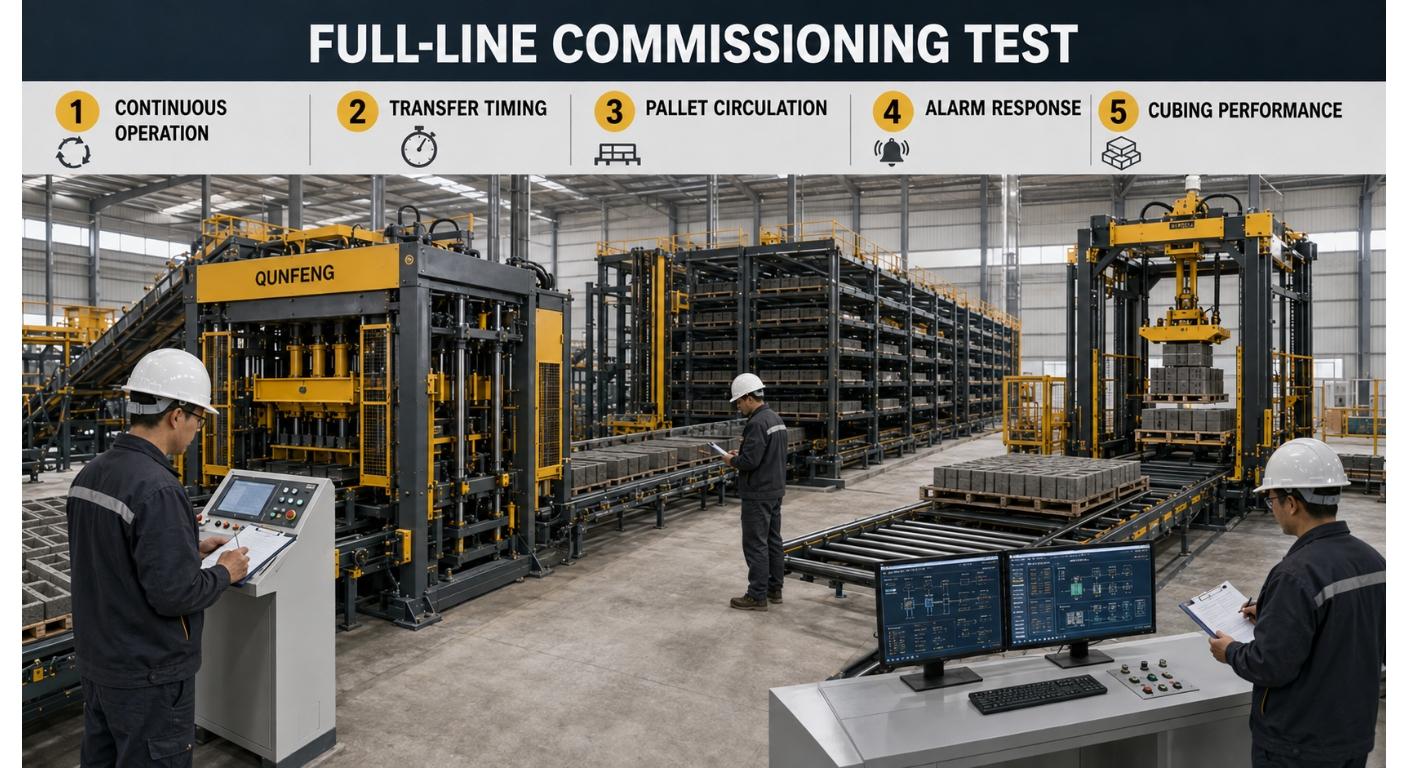
At the time of commissioning, pass representative material through batching, mixing, molding, transfer and curing handling and cubing. Identify operator touch points and where materials start queuing.
The most helpful question is not “Did ALL machines run?”.
It is: Was the entire process continuous without any one part in the process waiting for another part to repeat?
Trial Item | Record During Test |
Planned Product | Block type and dimensions |
Continuous Run | Actual uninterrupted time |
Operator Intervention | Reason and frequency |
Line Stops | Location and cause |
Wet-Side Buffer | Maximum pallet accumulation |
Curing Transfer | Rack movement status |
Cubing | Completed cubes per test period |
Alarm History | Fault type and response time |
Final Consideration
When the demand for production is high enough such that the material and product handling are integral, a fully automatic concrete block making machine makes good sense.
Confirm the actual product(s), shift target, curing strategy, pallet circulation, cubing method, staffing and maintenance capability prior to ordering. Then design equipment for that process.
You don't need lots of equipment to have the best fully automatic plant. It's the one that is all about working together with the equipments.
FAQ
Q1. Is there a concrete block machine that is fully automatic so that it does not require any manual work?
No. It substantially decreases the repetitive handling but operators are necessary to supervise, to check the quality, to maintain and to manage materials.
Q2. Which of the following is typically part of a full automatic block line?
May involve batching, mixing, moulding, pallet conveying, curing handling, cubing and pallet circulation. The final configuration will be based on the project.
Q3. Why Curing is important in the Selection of Machine Capacity?
The curing system needs to be of a type that will accept the wet products from the press. Limited space or transfer capacity may be a limiting factor in the whole line.
Q4. Is it possible to produce different blocks using one automatic line?
Yes, provided the mold(s) and machine configuration is adequate. Special material-feeding equipment can also be needed to pave or to make decorative products.
Q5. What should the tests be prior to final application?
Test entire manufacturing process using typical raw materials and products. Test timing of transfer, alarm and pallet circulation and cubing (not just the press).