Author: Site Editor Publish Time: 2026-02-20 Origin: Site
Hydraulic Block Machine projects in 2026 are no longer judged only by “can it make blocks,” but by whether the blocks come out dense, consistent, and easy to manage on a real production floor. From QUNFENG’s manufacturing perspective, the key shift we see in modern brick plants is this: buyers want high-strength products with less noise, less rework, and lower day-to-day operating cost—not a complicated system that requires constant manual correction.
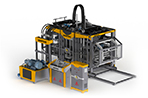
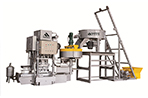
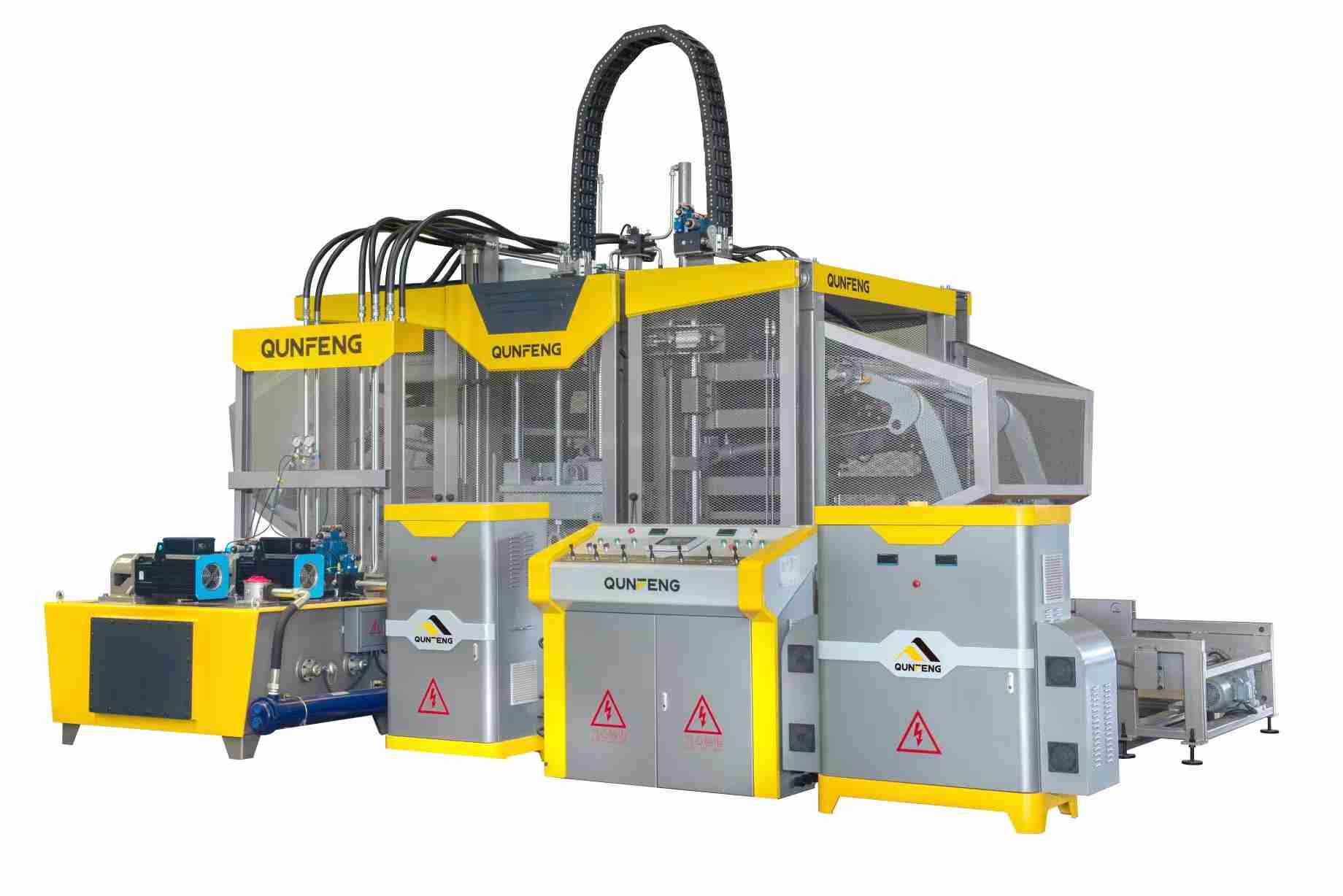
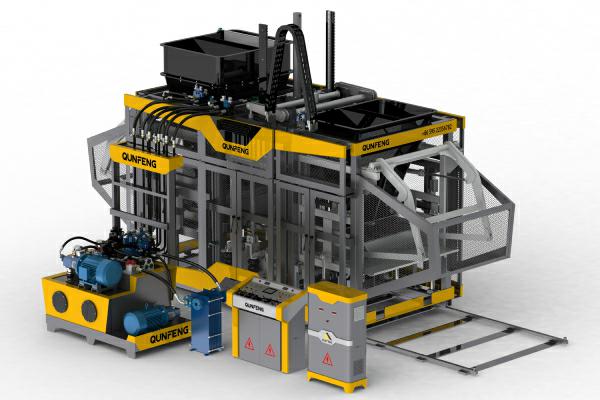
That is exactly why the QP600 was developed as an Automatic Static Pressing Machine for medium-scale, high-quality production. It combines 600T (6000KN) static pressing force with a practical, economy-driven design logic, so the machine does not just “press hard”—it helps you build a repeatable production routine.
Many producers are familiar with vibration-based machines. They can work well, but product density and surface quality often depend heavily on mix stability, operator experience, and on-site tuning. In contrast, a 6000KN static pressing approach focuses on making density and strength more “mechanical and repeatable.”
For dense bricks and pavers, static pressure improves compaction in a direct way: the material is pressed into shape under controlled force, which helps reduce weak corners, inconsistent edges, and internal voids. In practical terms, this can mean fewer cracks during handling, better stacking stability, and more consistent appearance across batches—especially valuable when you are supplying municipal paving projects, industrial yards, or branded landscape contractors who care about uniformity.
Just as important, dense bricks support your reputation. In 2026, many projects move fast, and contractors do not want to babysit materials on site. A Hydraulic Block Machine that can deliver consistent density is a production asset, but also a market advantage.
One of the biggest “hidden costs” in many traditional lines is not the block itself—it is the production support system around it. Pallets are a classic example. They take budget, storage, maintenance, and replacement planning, and they create a constant flow of handling work.
The QP600 applies Board-Free (pallet-free) technology to remove the need for expensive production pallets. For many factories, this shifts the cost structure in a very simple direction: less capital tied up in consumables, fewer pallet-related stoppages, and less space occupied by pallet circulation.
Here is what pallet-free design can practically change for your plant:
✓ Lower investment threshold when upgrading from traditional vibration equipment
✓ Cleaner workshop logistics with fewer items moving between stations
✓ Reduced recurring costs tied to pallet wear, deformation, and replacement cycles
If your 2026 plan is to expand product quality without inflating overhead, pallet-free design is not a “feature.” It is a business decision that stays measurable month after month.
Dense bricks require more than pressure. The material must also be distributed evenly in the mold before pressing. If feeding is uneven, you can see it later as surface wave marks, color inconsistency, or strength deviation between corners.
The QP600 uses a dual-motor distribution system that independently controls front and rear timing. Instead of relying on a single motion to push material across the mold, the feeding sequence can be balanced more precisely. The goal is simple: the same mold cavity should receive the same volume of material, cycle after cycle.
At the same time, QP600 integrates a vibrating table micro-vibration system. This is not “high-noise vibration for everything.” It is micro-level assistance designed to help material settle faster and more uniformly, while keeping noise significantly lower than conventional vibration systems.
For daily operations, this brings a set of practical benefits:
✓ More uniform density across the full product surface
✓ Faster stabilization of material during feeding
✓ A quieter, more controlled work environment that is easier to manage on long shifts
In real factories, stable feeding is often the difference between a smooth day and a day full of adjustments.

Automation only has value if it makes the line easier to run. In 2026, many plants face staffing pressure and training gaps. A Hydraulic Block Machine must support repeatable production with fewer “expert-only” steps.
QP600 is powered by Siemens PLC control to enable fully automatic operation. More importantly, it integrates machine, electricity, and hydraulics into a coordinated control logic. This helps reduce the common friction points that cause downtime: unclear fault causes, slow troubleshooting, and inconsistent operator responses.
A practical automation setup should deliver results like:
✓ Remote monitoring readiness for production visibility and maintenance planning
✓ Automatic fault diagnosis that shortens time-to-recovery
✓ More repeatable cycle control that reduces quality drift across shifts
To support daily use, QP600 also includes a man-machine interface designed for clear operation. The system can guide operators through basic troubleshooting steps, which reduces dependence on one “senior technician” to solve every small issue. The outcome is less downtime, smoother training, and more stable output.
A smart investment is not only about today’s orders. It is also about what your line can produce next year when customer demand changes.
Beyond standard bricks and pavers, QP600 is capable of producing high-value dry PC terrazzo tiles, as well as paving stones and slope protection bricks. This matters because product diversification can protect your factory from price competition. When market supply grows, basic products often face margin pressure. Higher-value items help you protect profitability and build differentiated customer relationships.
QP600 also supports targeted versatility in product format. For example, it is designed for products in the 50–150 mm height range, which covers many common paver and brick requirements while keeping production focused and efficient.
If your strategy is to sell more than “commodity blocks,” a Hydraulic Block Machine that supports value-added products can help you move from volume thinking to margin thinking.
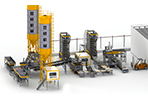
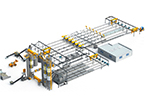
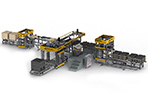
Before choosing a Hydraulic Block Machine, it helps to match the machine logic to your plant reality: product mix, workshop space, power planning, and output rhythm. QP600 is designed for medium factories that want a strong balance of performance and investment, with a footprint optimized for practical installation and workflow planning.
A key point for planners is cycle rhythm. In medium-scale lines, stable cycle time and stable quality often matter more than pushing extreme speed. When products come out consistent and stackable, your downstream handling becomes easier and your curing/yard planning becomes more efficient.
Planning a 2026 upgrade for dense bricks or high-strength pavers? Contact QUNFENG with your target product type (solid brick, paver, or dry PC terrazzo tile), product height range (e.g., 50–150 mm), and your daily output goal. We will recommend a practical QP600 configuration, explain how 600T (6000KN) static pressing and pallet-free design can reduce your operating cost, and provide a manufacturing-ready quotation for stable delivery and long-term support.