Author: Site Editor Publish Time: 2026-08-27 Origin: Site
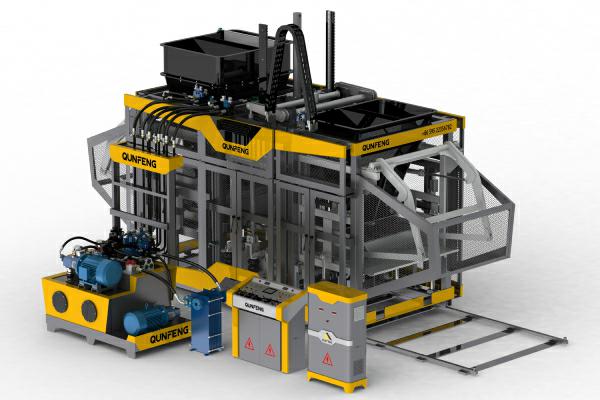
When considering a hydraulic block production machine, a large number is usually the first one that is thrown out: 600 tons, 800 tons or even more.

It is helpful information, but does not indicate if the machine will make a good brick 8 hours into a production shift.
The more telling questions are different for a factory manager. What is the rate of pressure increase? Is there even distribution of material to all parts of the mold? Is the oil temperature OK? But can the next round be as uncomplicated as the first?
That's where the block production with hydraulic comes into play.
Bigger is NOT necessarily better press.
The character of the hydraulic machines is given by the static pressure. The machine's main compaction mode is controlled force compaction, rather than high-frequency table vibration, which uses the press system to compact the material within the mold.
However, reaching peak tonnage is a part of the process.
The pressure distribution, press-head movement, mold filling and demolding all have an impact on the product. Even if the mould is not completely filled up, it is possible to obtain inconsistent bricks with very high pressures.
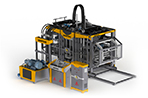
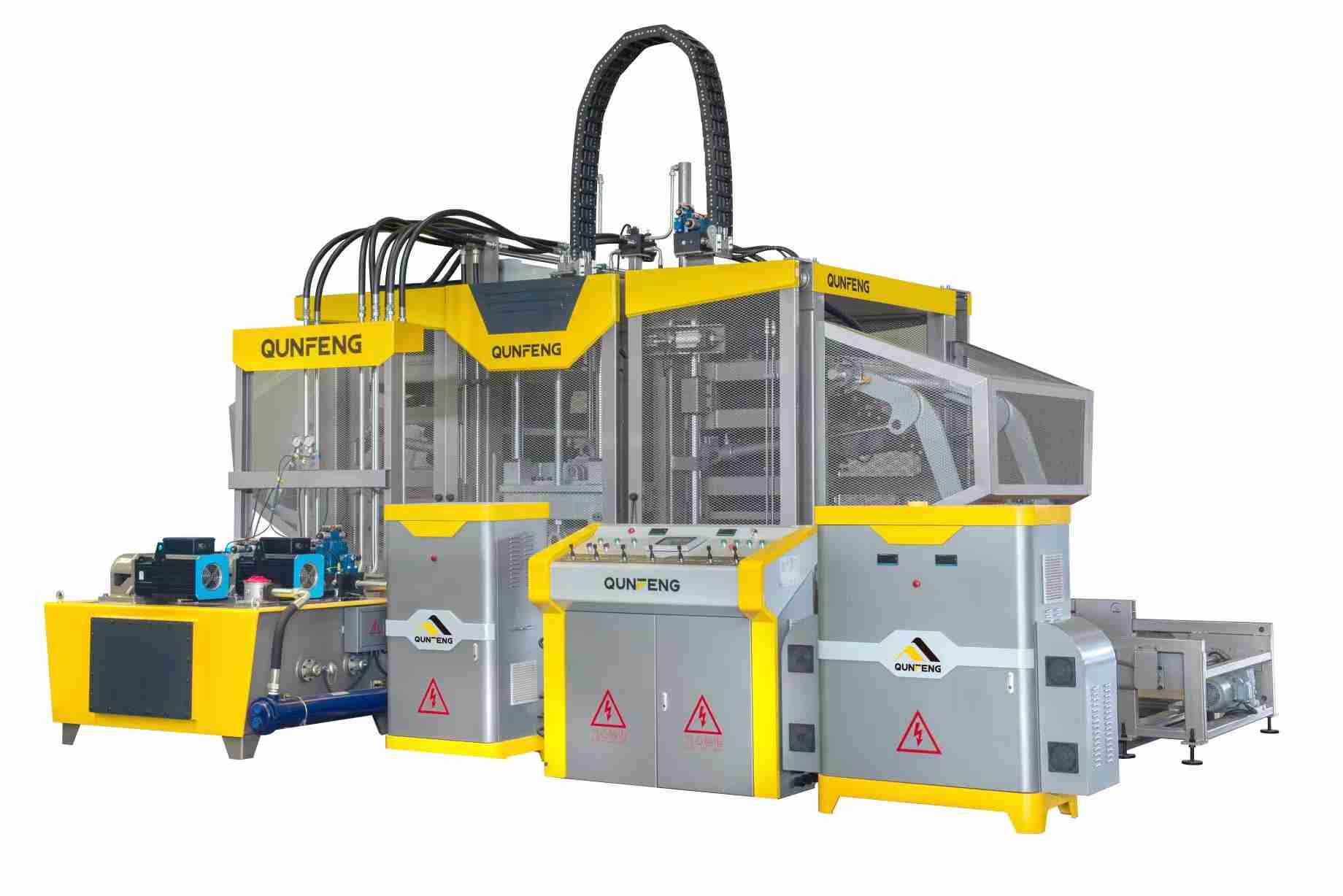
Qunfeng's QP600 hydraulic block machine adopts 600ton static pressing system, QP800 hydraulic block making machine enters the higher force servo controlled hydraulic system. When used in the context of product and product requirements the difference is more useful than simply a “bigger is better” comparison.
See how the Pressure is Built
Hydraulic cycle experiences a rhythm.
Stuff is put in the mould. The press approaches. Pressure rises. The product is maintained for a short time, released and demolded. All the steps must occur in the proper order.
An abrupt increase of pressure may cause the material condition to be too high for good redistribution of the mix. Any unnecessary slowdown movement loses cycle time.
This is the reason to consider Servo Hydraulic Control. Qunfeng's QP800 models are equipped with electro-hydraulic servo systems, and the QP900 models have closed-loop servo control with proportional valves and displacement sensing for pressure and position control.
The important question for a purchaser isn't only “Does it have servo?”
Inquire about the function the servo is controlling.

The Feeder must complete his/her task before the press begins.
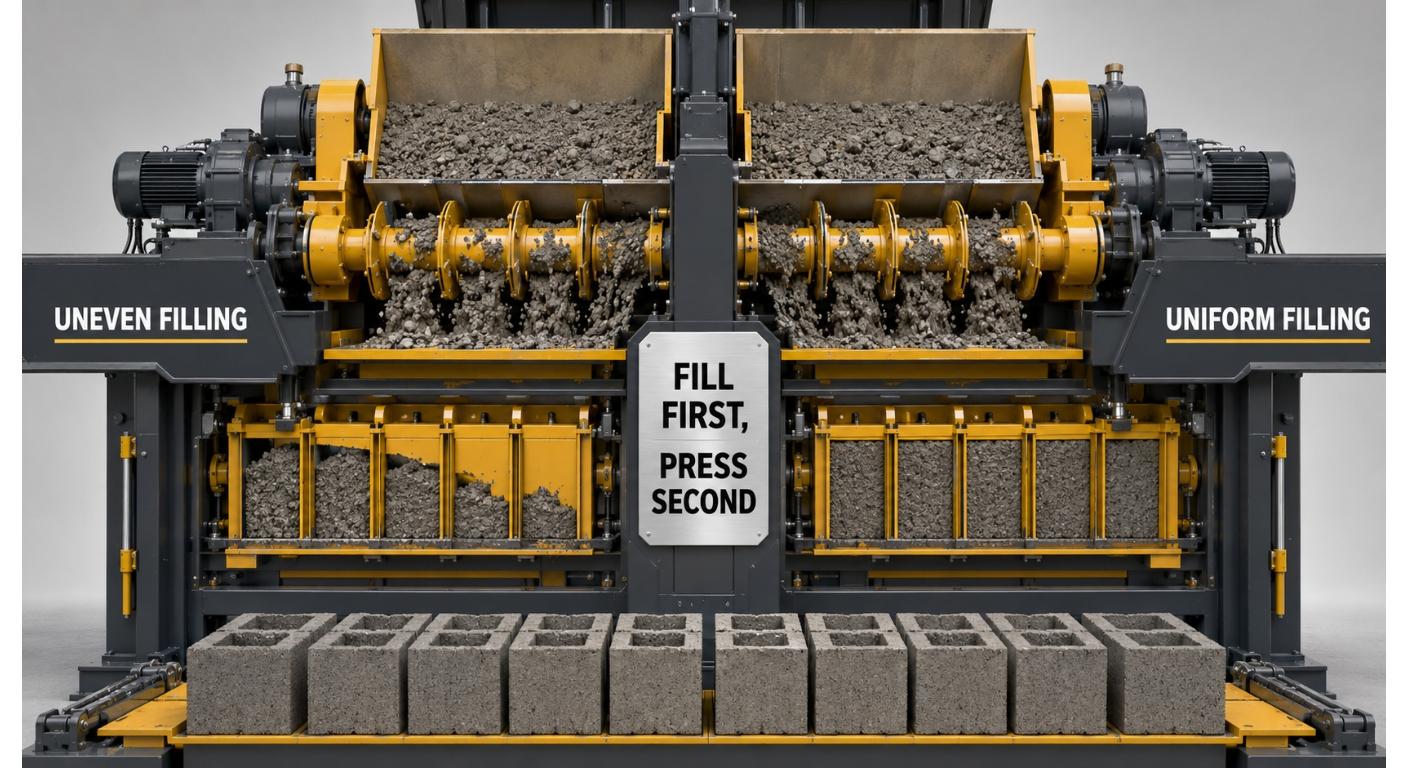
The most attention is paid to the hydraulic pressure, but filling is the first step.
If the material of the mold is not uniform, it cannot be expected to have everything even out after the press. This is particularly evident with dense pavers, and standard bricks and mixes with different sized particles.
Qunfeng's QP800 features double-motor feeding, rotating feeding components and micro-vibration, which will enhance the material distribution before pressing.
Test a factory trial, rather than a single product. If the bricks on one side are consistently lighter or have a different surface texture than bricks on the other, an investigation of feeding should be done prior to adjusting the pressure settings.
Trial Check | What to Compare |
Mold Filling | Left, center and right cavities |
Product Weight | Samples from different positions |
Pressing Cycle | Early vs later cycles |
Surface Finish | Voids, cracks or uneven areas |
Demolding | Sticking or deformation |
Repeated Output | Variation across several cycles |
Alarm Record | Frequency and cause |
Hydraulic Oil has a Working Life During Every Shift.
This section is not often included on the sales photo.
As energy is transferred between the various pumps, valves and cylinders, hydraulic oil performs on a continuous basis. The temperature, cleanliness and filtration are therefore important factors regarding long-shift reliability.
A machine that is great for 10 demo cycles has to be put through normal production hours.
Prior to buying, inquire about the location of oil temperature measurement, the method of oil filtration, and the suggested interval for maintenance and which hydraulic components are likely to be available locally.
The hydraulic system is not supposed to be a black art and should not be the knowledge and domain of only the equipment supplier.
Changes in Energy Use over the Cycle
Not all the movements in a hydraulic press require maximum power.
The system has to manage different loads when approaching, pressing, holding a load, and returning and feeding it. A controlled hydraulic circuit can provide variable output to suit operating conditions, not wasting energy constantly as is done with a control valve.
Qunfeng describes both its QP800 static pressing machine and QP900 concrete hydraulic block machine around board-free or pallet-free forming concepts.
For the buyer, however, it is important to note that the energy saving percentages shown in the brochure should not be used in place of the calculations carried out for the project.
Request installed power, planned work schedule and actual production assumptions. A cost per sellable product (not just a percentage) is more useful than electricity cost in a percentage.
Pallet-Free Production Isn't Just About Pallet Cost
Traditional production pallet is eliminated during the forming process by some hydraulic static presses.
That instantly gets people's attention as pallets mean purchase, storage, cleaning and replacement costs. But it's as important as the layout implication.
Board-free static pressing, Qunfeng's QP900 concrete hydraulic block machine ensures that the dense products can come out of the forming process without the conventional moulding pallets.
That's a different way of looking at downstream handling.
Once you decide to produce brick without pallets, follow the brick after demoulding: How is it transferred? When is it stacked? What kind of assistance are required for the new product? What is the first place where the curing process starts?
If a pallet is removed, it means that another portion of the factory is in need of reevaluating.
If changes in raw materials affect the required machine settings, the machine will automatically adjust to comply with the standards.
The concrete recipe is not the only reason why a hydraulic block production machine is not working.
Feed and compaction of natural aggregates, stone powder, fly ash, processed construction waste and other materials might be different. Moisture variation can sometimes be significant as it will influence material movement as well as forming behaviour.
Qunfeng's hydraulic range is offered for solid bricks, paving products as well as alternative and recycled materials applications. The greater block machine product range also distinguishes Hydro-Forming from Vibro-Forming equipment, as these are different choices of process not different names.
If possible, provide the representative raw material information of the region before the configuration of the machine is completed.
It is recommended to check maintenance access prior to production.
When the machine has not yet been surrounded by conveyors, electrical cabinets, material equipment and safety fencing, the factory will appear spacious.
Later, someone will still have to access the pump, valves, cylinders, filters and sensors.
This is where layout planning is now feasible.
Maintain service access around components requiring inspection/servicing. Verify locations and methods of filter changes, hydraulic oil fill/drain points, and parts that can be replaced without taking down nearby equipment.
An easy to maintain machine will be more likely to be maintained in a timely manner.
Maintenance Point | Planning Question |
Hydraulic Oil | How is condition checked? |
Filter | Can it be replaced easily? |
Pump | Is service access available? |
Valves | Are common spares identified? |
Cylinders | Can seals be serviced safely? |
Cooling System | How is heat removed? |
Sensors | Are replacements accessible? |
Service Space | Can technicians work around machine? |
Install and conduct a Heat-Soaked Production Trial
One question is answered by a short demonstration – can the machine produce a brick?
It's a better question, can it continue to produce the same brick, and a longer trial?
If possible, test machine following a significant period of hydraulic operation. Make comparisons between early and later cycle products. Monitor pressure behavior, feeding consistency, oil condition, alarm history and cycle variation.
Don't stand all day long by the control screen.
Pick up the bricks.
Measure them. Compare weights of samples from various mold positions. Look for corners and surfaces. The real payoff of a hydraulic system is found in the products produced by the machine.
At what time is hydraulic forming sensible?
In cases where the project is focussing on high density concrete products, pressed pavers, solid bricks, or on using special raw products, or on a pallet-free production concept, hydraulic forming should certainly be taken seriously.
However, it might not be as interesting if a producer's goal is the greatest flexibility in a large number of hollow-block sizes and frequent mold changes. If so, it will be worthwhile to compare the hydraulic forming with conventional vibro-forming before committing to the process.
It all starts with the product, and not the tonnage that is attached to the machine model.
Final Selection Check
When ordering a hydraulic block production machine, specify the size of the product, raw material, production output and working hours per shift.
If so, explore the press further.
Inspect feeding of materials, pressure controls, hydraulic cooling and filtration, demolding and maintenance access and downstream handling. Inquire about the machine's performance after running, not just for a few cycles.
The force pressing is important.
It is the action that the machine takes upon that force that is most important.
FAQ
Q1. A hydraulic block production machine is used to make what?
Depending on the type of mold and feeding system it can be used for making solid bricks, pressed concrete units like pavers etc. Check the configuration of the machine with the product range.
Q2. Is more tonnage of hydraulic the better option?
No. The pressure required depends on the product and the raw material / forming process. Both feeding and pressure control are of paramount importance.
Q3. What's the purpose of servo hydraulic control?
It can enhance the hydraulic movement, pressure and response control. The true gain will depend on the design and configuration of the system.
Q4. Pallet Free Hydraulic Block Production...what is it?
It is not a traditional production pallet that is under each product as it is being formed. The downstream transport and stacking must hence be planned accordingly.
Q5. What are the items that should be verified when performing a machine trial?
Examine finished-product uniformity, feeding, pressure response, alarms and repeat cycling. The longer the continuous trial, the more informative it will be than several cycles of demonstration.