Author: Site Editor Publish Time: 2026-04-21 Origin: Site
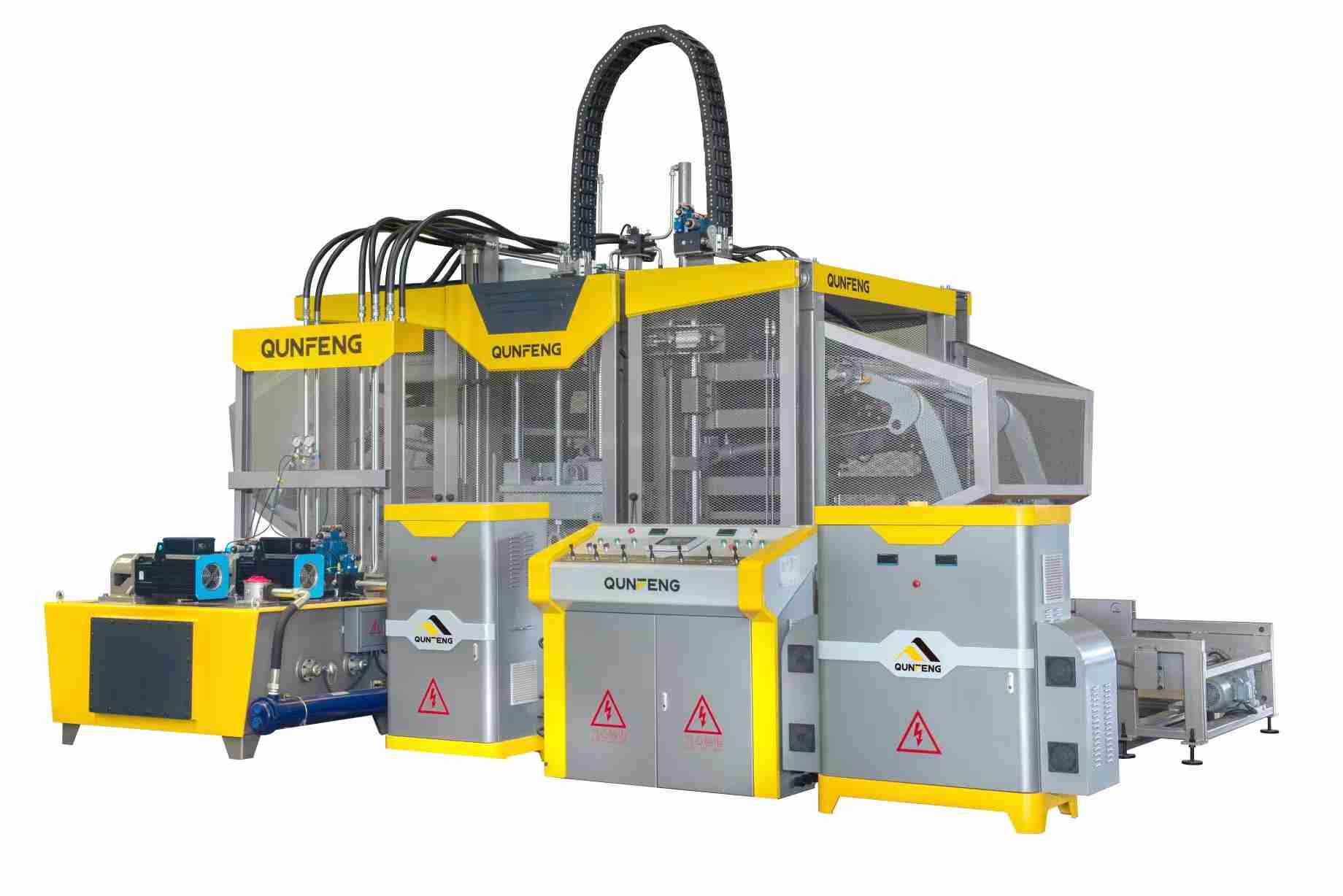
Hydraulic Concrete Block Machine technology has come a long way from noisy, fixed-flow systems that waste power and produce uneven blocks. In 2026, global buyers are demanding one thing: precision hydraulics that adapt to every cycle, save real money on electricity, and deliver consistent high density without over-engineering. QUNFENG, an established manufacturer with decades of production expertise, has answered that call with a servo-driven hydraulic system that fundamentally changes how concrete blocks are formed.

But let's be clear—not all hydraulic machines are equal. Many still use outdated constant-speed pumps, hammering oil through the circuit regardless of the actual load. That approach burns energy, overheats the fluid, and creates inconsistent compaction. The result? Higher operating costs and more rejects. Here is what a truly modern Hydraulic Concrete Block Machine should deliver in 2026.
Before presenting the solution, the following explains the problems associated with conventional hydraulic circuits:
Power loss from pumps with a fixed output: Conventional systems operate at full flow and use unnecessary energy which is dissipated as heat rather than put to useful work, even during idle periods.
• Unreliable density control: There is no pressure feedback control which means that pressure is allowed to cycle without control resulting in density variations from cycle to cycle.
• Decreased production: Increased cycle times are a result of the slow response of standard proportional valves.
• Unreliable: systems operating constantly at full pressure have poor reliability due to accelerated sealing surface wear, pump dissipation, and degradation of hydraulic fluid.
These issues become critical when factories scale up. A poorly designed Hydraulic Concrete Block Machine can add thousands of dollars to annual electricity bills and require costly downtime for repairs. That is why leading buyers now prioritise intelligent hydraulics as a top selection criterion.
QUNFENG has engineered a closed-loop servo hydraulic system that continuously monitors actual working conditions and adjusts oil flow and pressure in real time. Unlike conventional machines that run at fixed output, this system uses a constant power variable pump that matches power delivery to demand—no more, no less.
• How does servo control improve block quality? Linear displacement sensors and servo proportional valves work together to achieve precise pressure and position control. Every compaction stroke follows the same force curve, so block density remains uniform across thousands of cycles.
• What does this mean for your energy bill? The intelligent pump reduces energy consumption by up to 30% compared to traditional fixed-flow systems. For a mid-size factory running two shifts, that saving alone can cover the machine's incremental cost within 18 months.
• Why does faster response matter? Servo hydraulics respond in milliseconds, cutting the moulding cycle down to 15-17 seconds. Faster cycles translate directly to higher daily output without adding labour or floor space.
Industry benchmarks confirm the trend. Quadra's latest servo-hydraulic systems deliver measured energy savings of approximately 20%, while AP&T reports reductions of 40-70% depending on the application. QUNFENG's solution sits firmly in that high-efficiency range, making their Hydraulic Concrete Block Machine a compelling choice for cost-conscious buyers.
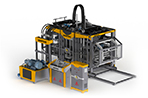
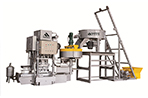
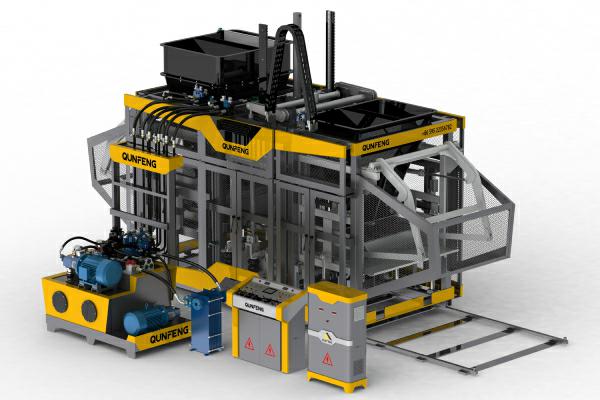
Energy efficiency is only half the story. What sets a Hydraulic Concrete Block Machine apart from the rest is the efficiency of hydraulic pressure in the process of concrete compaction. QUNFENG's flagship model applies 900 tons (9000 KN) of bidirectional static pressure—pressing from both the top and bottom simultaneously.
• What is bidirectional pressing? The main oil cylinder and demoulding cylinder operate in sync to achieve equivalent two-way pressurisation. This “sandwich” method compresses the material evenly from both sides.
• Why does this matter for block strength? Traditional single-direction pressing leaves a density gradient—harder on the bottom, softer on top. Bidirectional pressing eliminates that gradient, producing blocks that are uniformly strong and immediately stackable without pallets.
• How does it reduce pallet costs? Because blocks come out dense enough to handle immediately, the machine operates completely pallet-free. That eliminates the need to buy, maintain, and replace wooden or steel pallets—a recurring expense that many buyers overlook.
The combination of intelligent servo hydraulics and bidirectional pressing creates a Hydraulic Concrete Block Machine that solves two major buyer pain points at once: high energy costs and hidden pallet expenses.

2026 is the year of circular construction. Global construction and demolition waste management is projected to reach $217 billion by 2034, and recycled aggregates alone exceed $10 billion annually. Recycling laws have changed and contractors want to partner with suppliers able to process industrial byproducts into useful blocks.
The primary challenge is: recycled materials have different properties compared to virgin aggregates. They are more difficult to process, requiring careful control of pressure, and more versatile hydraulic system adjustments. QUNFENG's design has these challenges in mind.
• Adjustable large-stroke demoulding cylinder: Compresses materials with varying stability, while also producing a wide range of bricks (up to 350mm mould frame height).
• Versatile multiple material distribution: Redistributes fly ash, slag, crushed concrete, and various other industrial solids waste without the need to reconfigure the distribution system.
• Uniform compaction is achieved under varying loads: The pressure of the servo system is automatically adjusted to maintain consistent density, irrespective of the material or the characteristics of the different batches.
This means the customer is not limited to costly virgin aggregates. A Hydraulic Concrete Block Machine, with the correct specifications, can convert waste materials to usable products, and at the same time, lower costs and achieve green building certifications.
While selecting hydraulic block machines, consider the following four characteristics of performance:
• Maximum pressure: QUNFENG provides 9000 KN (900 tons) of pressure—ideal for producing high density pavers and load-bearing units without excess use of cement.
• Cycle time: 15-17 seconds for moulding, ensuring high production rates for large project execution.
• Energy efficiency: A constant power variable pump eliminates the disruption and losses associated with fixed-flow competitors, resulting in about a 30% reduction in power consumption.
• Material versatility: Handles recycled aggregates and industrial waste, not just virgin stone.
For a full specification comparison, QUNFENG's technical data page provides detailed cycle-time and capacity charts based on different raw materials.
If you are sourcing equipment this year, ask every supplier these four questions:
• Does the hydraulic system use servo control and a variable pump? – Fixed-flow machines are obsolete for energy-sensitive factories.
• Is bidirectional pressing available? – Single-direction compaction cannot match the density uniformity of two-way pressing.
• Can the machine run pallet-free? – Pallet costs add up faster than most buyers realise. Eliminate them.
• Does the manufacturer support waste-material testing? – Your raw material mix will change. The hydraulic system must adapt.
QUNFENG's Hydraulic Concrete Block Machine checks every box. Their engineering team also offers material testing services to optimise pressure curves for your specific waste streams—an advantage that off-the-shelf machines rarely provide.
The global block machine market is shifting decisively toward intelligent hydraulics. Buyers in 2026 no longer accept fixed-flow, energy-wasting designs. They demand servo-controlled systems that cut electricity bills, bidirectional pressing that eliminates pallets, and the flexibility to process recycled materials without compromising block strength.
QUNFENG has built exactly that. Their Hydraulic Concrete Block Machine combines 900 tons of bidirectional static pressure, closed-loop servo control, and pallet-free operation into a single high-efficiency platform. For manufacturers looking to lower operating costs, increase output, and meet green construction mandates, this is the benchmark.
To see how QUNFENG's hydraulic technology performs with your specific raw materials, visit QUNFENG's official website or contact their global sales team for a custom performance analysis.