Author: Site Editor Publish Time: 2025-09-08 Origin: Site
Cement Block Machine Cost often dominates the first conversation, but at Qunfeng we pay closer attention to the savings your plant keeps month after month.

Price matters, yet it is only the first number in a long equation. Real profitability comes from how a line runs every day - how fast it cycles, how steadily it feeds, how rarely it stops, and how consistently it delivers saleable blocks. When any link in that chain is weak, the "cheap” option becomes costly through waste and downtime. From Qunfeng's shop floor to your yard, we have learned that lifetime value is shaped by structural stability, precise vibration, and smooth material flow. These elements protect margins not once, but shift after shift.
Your accountant will ask about total cost of ownership. We suggest a practical lens: what is the cost per block over a full year of production? That single figure reflects energy, labor, maintenance, and scrap. It also exposes the price of inconsistency. If density varies, curing lengthens. If edges chip, returns rise. If operators fight with controls, the line slows. A smart decision weighs Cement Block Machine Cost against these day-to-day realities.
✅ Common Hidden Drains on ROI
• Small energy losses from inefficient drives that compound into big bills.
• Quality swings that create rejects, callbacks, and reputation risk.
• Impact-heavy demoulding that accelerates wear and unplanned stops.
• Slow changeovers when moving between formats and block heights.
• Extra labor caused by complex interfaces or manual material feeding.
A complete cement block machine price breakdown should include purchase, installation, power, wear parts, labor, spare inventory, and scrap. Treat each line objectively. Then compare machines on the same playing field.
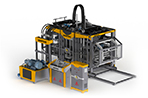
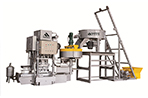
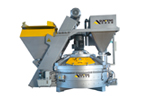
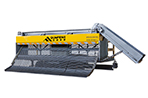
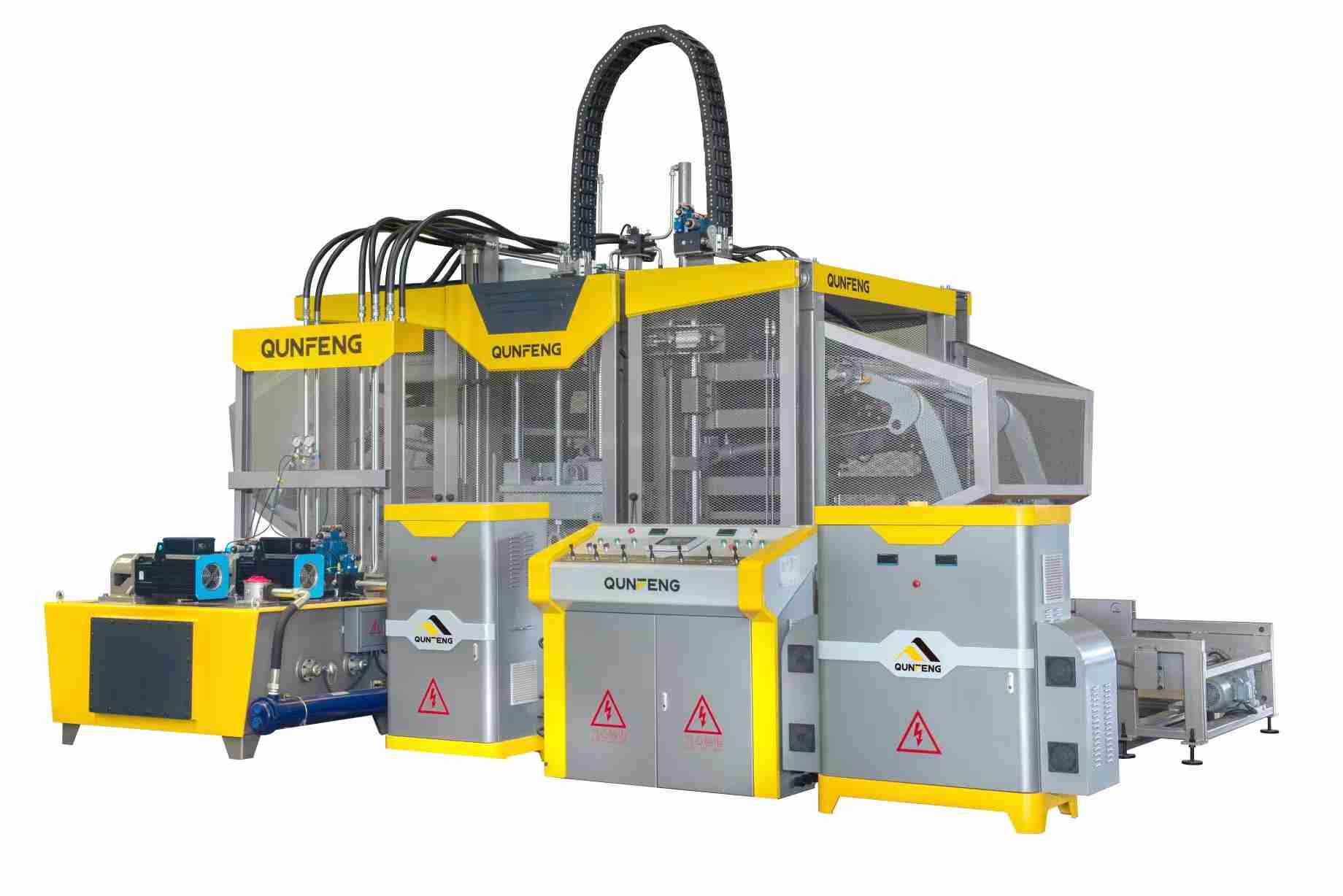
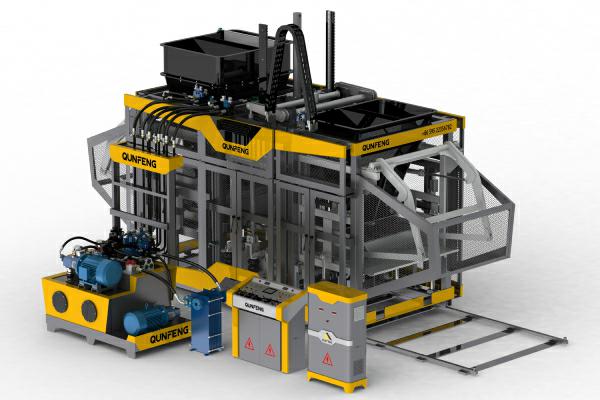
At Qunfeng, we engineer for steady output at low operating cost. Our concrete block machine handles both solid and hollow products and supports a broad working window - block height from 50-220 mm. That flexibility lets one compact line serve more orders without extra equipment or long changeovers. The result is less capital tied up and more capacity on the floor.
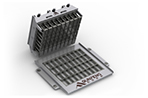
The heart of our approach is an advanced vibration system with double frequency conversion and motor-driven excitation. Response is quick, so molding is fast and parameters can be tuned for different block types without sacrificing uniformity. You gain cycle speed, but you also protect the machine because the energy is controlled and repeatable. To further reduce stress, the machine uses a knocking-type vibration system paired with a bow-shaped demoulding structure and synchronous demoulding. The release is smooth, which lowers impact forces, protects tooling, and helps produce clean faces and sharp edges. Less shock. Fewer stoppages. Better surfaces.
Material flow receives the same level of attention. An independent control system for material discharging uses a geared-motor hopper door for precise, repeatable feed. Operators get predictable fills without over- or under-charging the mold. That stability shows up immediately in density, and later in curing and dimensional accuracy. When the line behaves, supervisors stop firefighting and start optimizing.
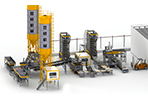
We also design around real plant constraints. The production line is simple and compact, so it occupies a small footprint and is easy to supervise. It is small but multifunctional, which makes it a strong fit for small and medium-sized enterprises that plan to scale. You do not have to choose between features and space. You get both. Automated controls and energy-efficient operation round out the package, driving consistent quality at a low cost to run.
✅ Design Choices That Lower TCO
• Energy efficiency: optimized drives curb kWh per block over the life of the machine.
• Fast molding with adaptable parameters: change products without derating throughput.
• Stable structural system: gentler demoulding reduces wear and parts consumption.
• Compact, full-featured footprint: more capability in less space.
• Economical to own: low operating cost with high, repeatable quality.
In short, we build for everyday performance. That is where long-term savings live. If you are running cost per block analysis across different bids, these design choices shift the result in your favor.
Turning a quote into a business case is straightforward if you connect Cement Block Machine Cost to measurable outcomes. Start by mapping your target output and the mix of block types you expect to run. Then translate the machine's capabilities into numbers your finance team recognizes.
Begin with throughput. A quick-response vibration system and clean demoulding shorten cycles while keeping density uniform. More good blocks per shift lowers fixed cost per unit even before you touch energy or labor. Next, look at energy per pallet. Efficient drives and tuned vibration cut consumption in a way you will notice on monthly statements. Over a year, that reduction becomes a margin buffer you can bank on.

Quality matters just as much. Consistent face finish, stable dimensions, and reduced chipping raise the percentage of sellable blocks. Fewer rejects also spare your crew from rework and your sales team from difficult conversations. Flexibility is another quiet source of savings. A 50-220 mm height range and adaptable parameters allow you to take varied orders without extra capex or long reconfiguration windows. Finally, think maintenance. Lower impact during demoulding preserves critical components. Planned service becomes predictable and shorter. Emergency downtime, the most expensive variety, declines.
You will notice a pattern: changes that save seconds often save parts; choices that protect parts also protect power; consistency in the mold leads to consistency in the market. Payback usually does not come from one headline feature. It comes from dozens of small, reliable efficiencies built into the machine and the line around it.
✅ Practical Evaluation Checklist
• Compare cost per block, not only the invoice price.
• Audit energy per shift before and after parameter tuning.
• Track reject rate and returns; tie them to specific products.
• Measure changeover time when switching block heights within 50-220 mm.
• Review downtime causes; impact-related wear should trend down.
If you run this checklist and the numbers move in the right direction, the budget case becomes clear. A competitive Cement Block Machine Cost plus durable savings is the combination that compounds value over time.
Call to Action - Build a Better Cost Curve with Qunfeng
If you are weighing Cement Block Machine Cost against lifetime value, let our team help you quantify the trade-offs. We can benchmark throughput, estimate energy per pallet, and outline a maintenance rhythm that fits your schedule and headcount. Contact Qunfeng for a personalized cost-to-savings evaluation and see how a compact, efficient line can lift your margins - one pallet at a time.