Author: Site Editor Publish Time: 2026-02-19 Origin: Site
Concrete Block Wall Machine performance often comes down to one “invisible” step: how evenly the mold is filled before vibration and pressing begin. At QUNFENG, we see precision feeding as the first real quality checkpoint—because density is not something you “fix later.” It is built into the block in the first seconds of each cyc
Many buyers evaluate a Concrete Block Wall Machine by its hydraulic pressure and vibration power. Those are important. But density consistency begins earlier, during material delivery and mold filling. If the material enters the mold unevenly—too much in one corner, too little in another—then even a strong vibration system must “fight” an unbalanced starting point. That is how you get density variation, edge chipping, and inconsistent compressive behavior from the same recipe.
From a production view, precision feeding creates a repeatable baseline. It helps each cavity receive a similar volume and similar distribution. That repeatability is what allows the next stages—servo vibration and hydraulic control—to do their work with less correction and less waste.
✓ More stable density across batches because the mold is filled the same way each time
✓ Cleaner block edges because the corners are not under-filled
✓ Less rework and fewer rejects because variation is controlled early, not discovered after curing
“Density” can sound abstract, so let’s translate it into daily outcomes. For wall blocks, density consistency affects strength, surface quality, and long-term durability. For pavers and curbstones, it affects abrasion resistance, color appearance, and how clean the product looks on a pallet.
A well-fed mold also improves the “look” of the block. When density is uneven, you often see surface defects: slight waves, dull spots, or micro-voids that become more visible after curing. In markets where buyers compare pallets side-by-side, those small differences reduce the perceived grade of the product.
In small to medium-scale plants, this matters even more. You want a Concrete Block Wall Machine that produces sellable blocks with minimal manual sorting. If workers must constantly separate “good” from “acceptable,” you lose throughput and raise labor cost—quietly, every day.
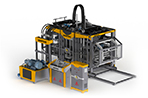
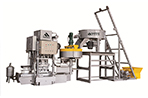
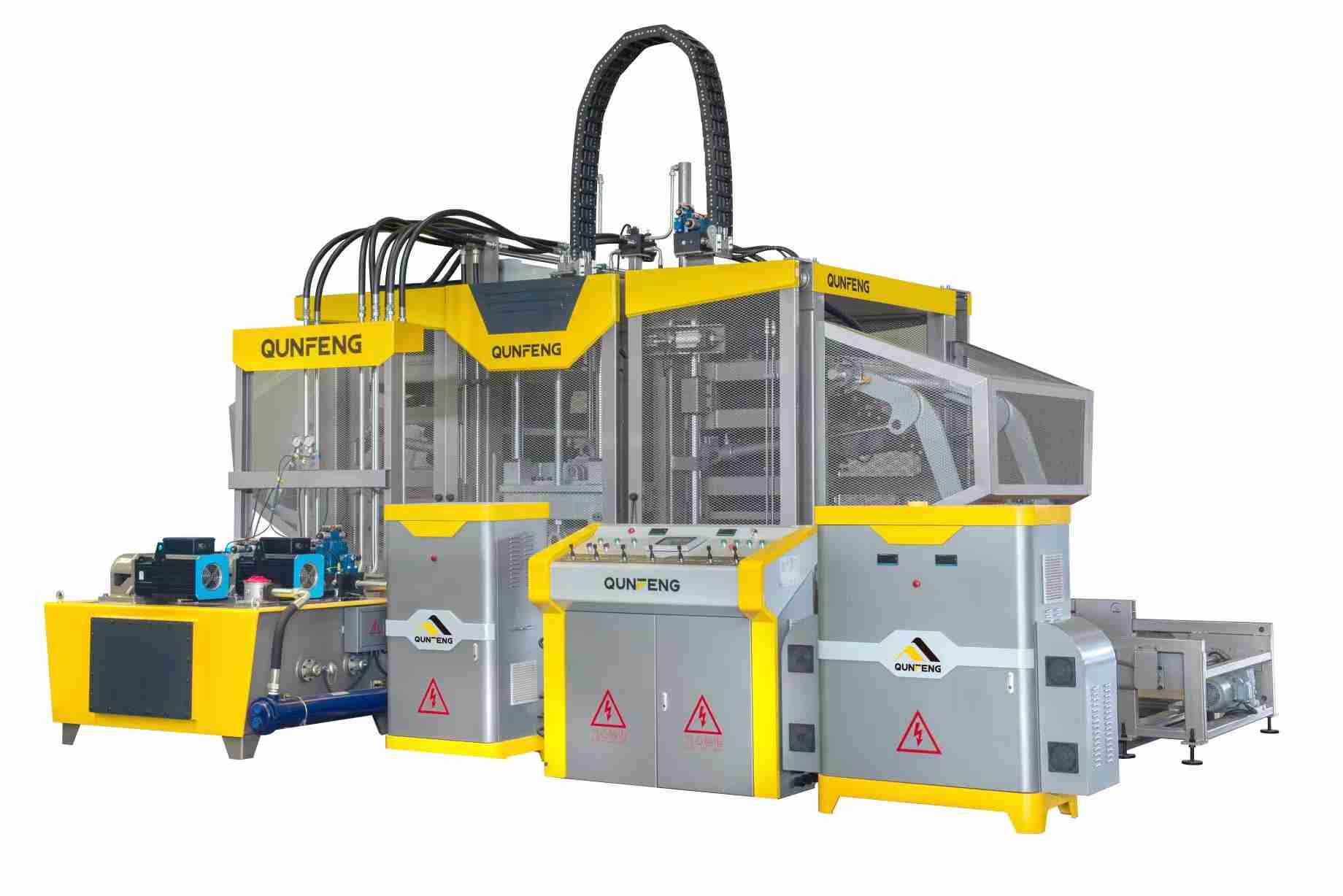
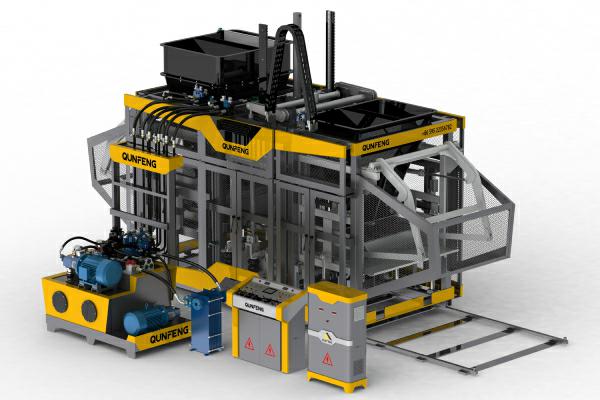
QUNFENG’s QS1000 is designed for small to medium-scale block production, where customers need dependable output and stable quality without complex operation. One of the QS1000’s practical strengths is its precision material feeding system, built to deliver fast and uniform filling before compaction.
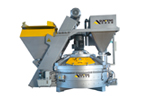
The core feeding method uses a 360° rotary rake with multiple bars. In simple terms, the system spreads material quickly and evenly across the mold area instead of pushing a pile from one direction. This reduces “dead zones” in corners and helps each cavity start with a similar material distribution. When this step is stable, density becomes easier to control—because vibration and pressing act on a balanced load.
For colored products such as premium pavers, the QS1000 also supports an anti-mix color system. This helps keep pigment layers distinct rather than blended at the edges. The benefit is practical: clearer visual separation and a more premium finish without relying on manual correction.
Feeding does not replace vibration. It makes vibration more effective.
On QS1000, the power system combines electro-hydraulic integration with high-speed servo vibration, designed for quick response and precise movement. In many plants, this combination is the difference between “fast” and “fast with stability.” When feeding is uniform, servo vibration can compact more efficiently and consistently. QUNFENG’s reference advantage here is a 20% increase in output compared to standard hydraulic machines—because the cycle becomes smoother, and the machine spends less time compensating for uneven filling.
The takeaway for buyers is not just speed. It is predictable speed. If you can keep output stable without sacrificing density, you can plan staffing, pallets, and delivery schedules with less risk.
✓ Uniform feeding reduces cycle-to-cycle fluctuation
✓ Servo vibration compacts faster when the mold starts balanced
✓ More predictable output supports better order planning and on-time delivery

Density is sensitive. Even if your recipe is correct, external factors—timing, vibration isolation, and frame rigidity—change results over time.
That is why QS1000 pairs the mechanical system with Siemens PLC control and remote cloud diagnosis. For plant managers, this is not a “tech feature.” It is uptime protection. When a system can diagnose 90% of maintenance issues remotely, downtime becomes shorter and more planned. Less downtime means fewer emergency restarts and fewer “quality swings” that happen when machines stop and restart mid-shift.
QS1000 also applies advanced damping technology using an airbag clamping structure and Michelin rubber pads. Vibration isolation is not only about comfort. Lower vibration transfer helps protect mold alignment and frame consistency over long operation. QUNFENG references a 10% reduction in noise pollution, and the practical benefit is that vibration energy is better contained where it should be—inside the compaction process—while reducing stress on the mold and frame.
Finally, long-term density stability depends on a stable structure. The QS1000 frame uses heat treatment and vibration aging to reduce internal stress. In plain language: the frame is built to stay straight under high-intensity production, so alignment and repeatability do not drift after months or years of work.
If you are comparing options for a Concrete Block Wall Machine, try using this simple buyer logic: do not start with maximum pressure. Start with repeatability. Repeatability is what keeps density stable when operators change, materials vary slightly, and production schedules get tight.
Here is a practical checklist you can apply during evaluation:
✓ Ask how the machine ensures uniform mold filling (not just “it feeds fast”)
✓ Check whether vibration and hydraulics are designed as a coordinated system
✓ Review control capability for consistency and troubleshooting, not just automation
✓ Confirm whether the frame and damping design protect long-term alignment
If you are planning a 2026 line upgrade or launching a small to medium-scale block plant, contact QUNFENG with your target products (wall blocks, solid bricks, pavers, curbstones), expected daily output, and whether you need color separation for premium pavers. We will recommend a QS1000 configuration that fits your site, explain how precision feeding stabilizes block density, and provide a manufacturing-ready proposal to keep production consistent day after day.