Author: Site Editor Publish Time: 2026-07-27 Origin: Site
Small and medium-sized concrete product manufacturers often work with limited capital, workshop space, labor, and order volume. Choosing a Concrete Hollow Block Making Machine is a production-planning problem that goes beyond the usual selection of equipment.
A line with too little capacity will negatively affect delivery time; however, having a line with overly large capacity will result in unnecessary expenditures on pallets, power consumption, cement foundations, line construction, maintenance, and staffing. The optimum Concrete Hollow Block Making Machine will provide a good balance of large output capacity, flexibility, low energy consumption, and ease of operation.
A Concrete Hollow Block Making Machine utilizes cement and aggregates (which may include sand, crushed stones, fly ash, slag, and others) to manufacture molded concrete products.
The process is cyclical and consists of the following steps:
• Feeding: An even distribution of the mixture across the mold.
• Vibration: The process by which air voids are eliminated and the density of the material is improved.
• Hydraulic pressing: The process by which the force for molding and demolding is applied in a controlled manner.
• Mold release: The process of depositing the molded concrete products onto pallets.
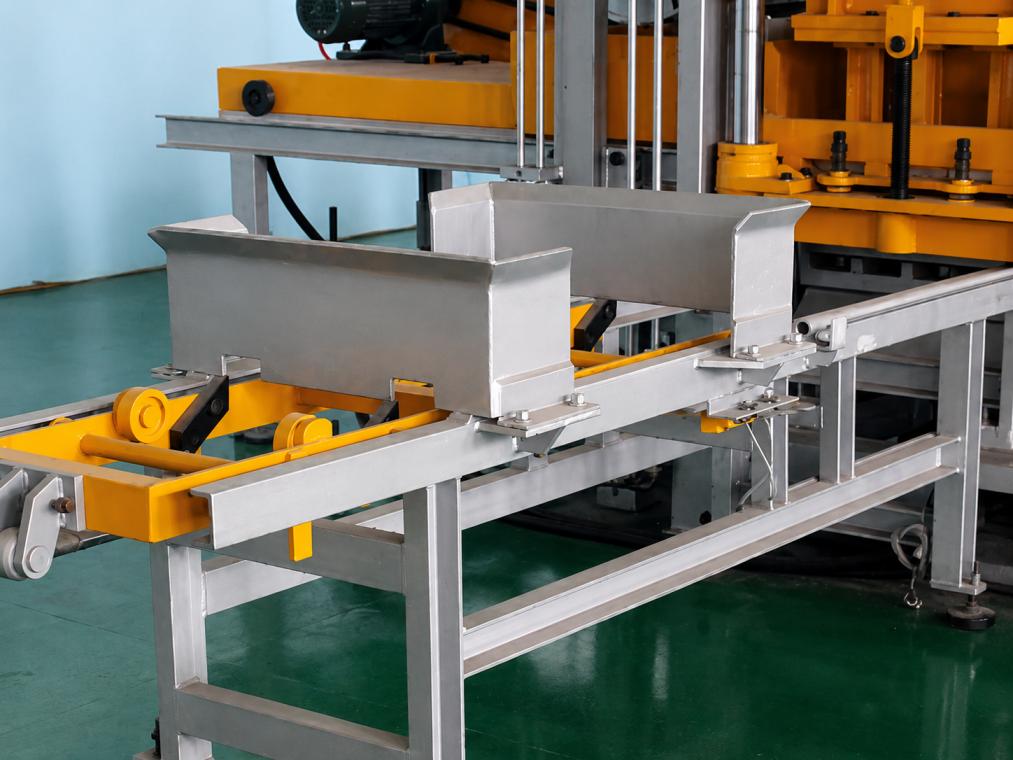
• Conveying: The process of transporting pallets to the curing area.
• Process control: Feeding, vibration, pressing and release.
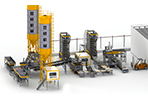
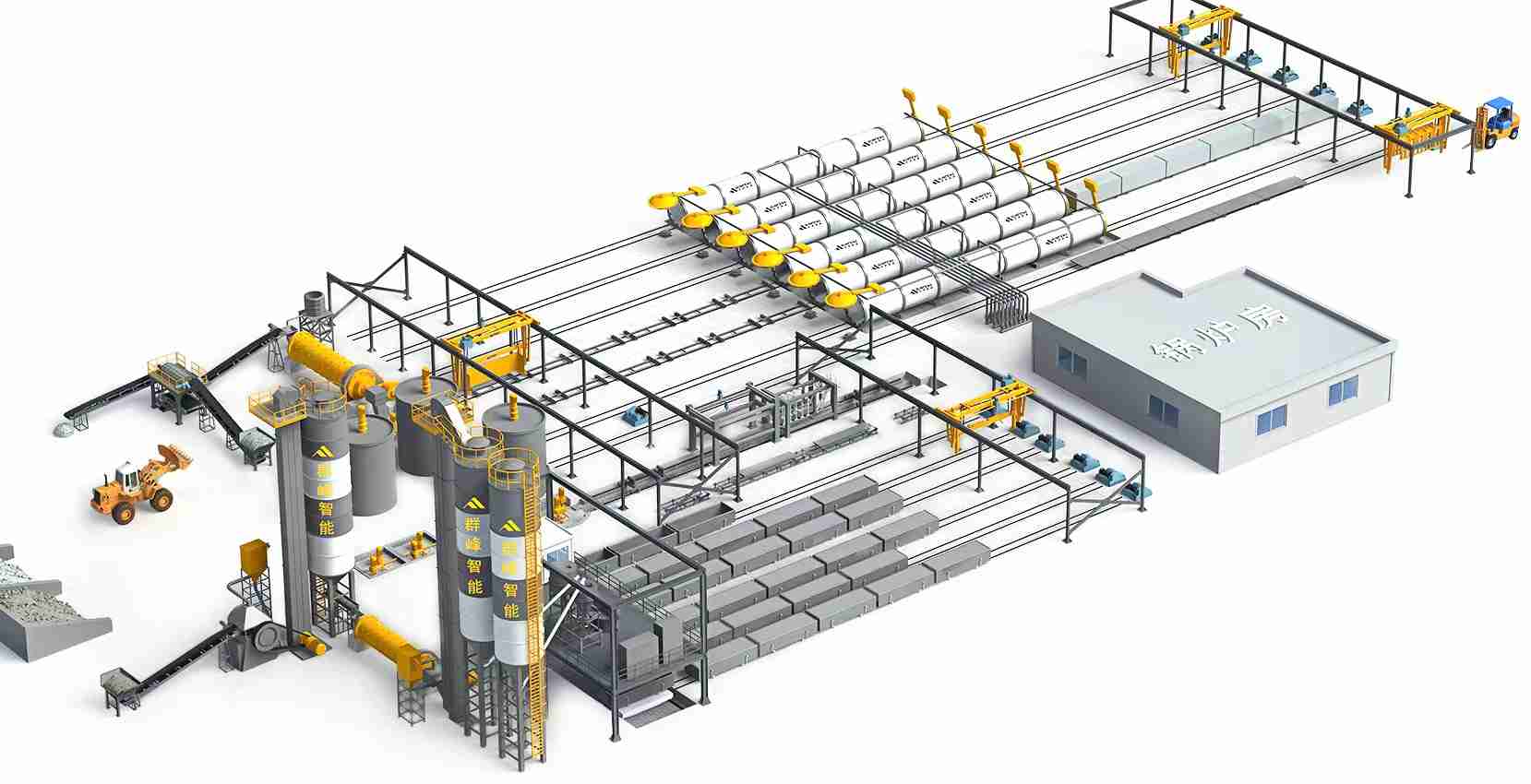
The complete production system, not just the machine, should be the primary concern for the buyer.
• Investment: This should include all mixers, conveyors, molds, pallets, all necessary electrical work and curing facilities.
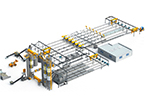
• Footprint: The design should allow all necessary material storage and maintenance as well as space for pallets to move.
• Stable output: The production capacity should at least equal the current demand but ideally should be designed with a buffer to allow for demand growth.
• Simple operation: The design should avoid reliance on highly technical labor.
• Flexible production: The use of interchangeable molds will allow for production of blocks, bricks, pavers, and curb stones
• Operating cost: Consider all costs associated with energy, labor, mold wear, and the cost of pallets.
• Expansion: Flexibility in design will allow for upgrades of the batching, conveying and/or stacking systems.
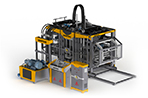
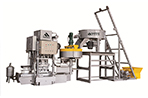
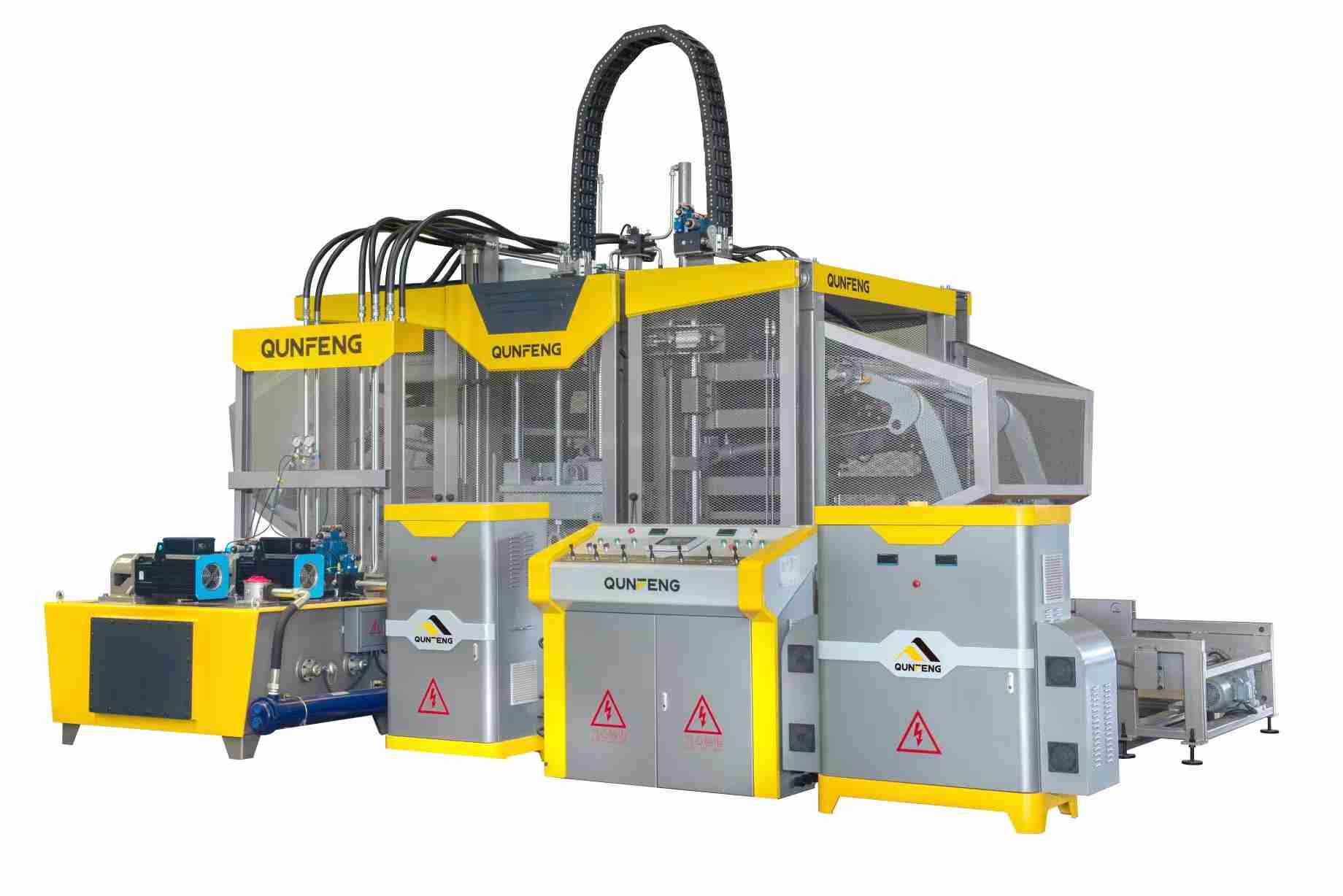
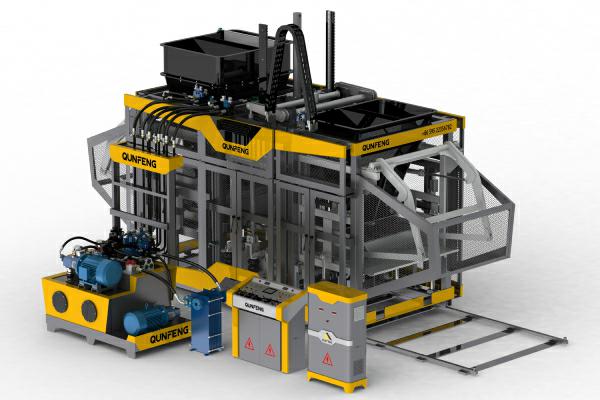
The following data illustrates a compact Concrete Hollow Block Making Machine configuration for smaller production sites.
Parameter | Reference Value(QF400) | Purchasing Relevance |
Pallet size | 680 × 535 mm | Affects pieces per cycle and pallet cost |
Molding cycle | 12–25 seconds | Supports steady small- to medium-scale output |
Vibration frequency | 0–68 Hz | Adjusts compaction for different products |
Rated pressure | 8 MPa | Provides consistent hydraulic force |
Total power | 21.45 kW | Helps control electricity requirements |
Machine dimensions | 2,800 × 1,160 × 3,040 mm | Fits workshops with limited floor space |
Product height | 50–250 mm | Covers pavers, bricks, blocks, and curbstones |
These values must be assessed together. A short cycle is useful only when feeding, pallets, curing, and labor can support it.

Machine Category | Investment | Automation | Typical Application |
Manual machine | Low | Low | Trial production and low volumes |
Mobile machine | Low to medium | Low to medium | On-site production |
Compact hydraulic machine | Medium-low | Medium | Startups and growing block factories |
Semi-automatic line | Medium | Medium-high | Stable regional demand |
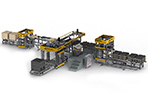
Fully automatic line | High | High | Large-volume continuous production |
Manual equipment costs less but usually delivers lower output and consistency. Fully automatic lines require more space, utilities, technical staff, and working capital. A compact hydraulic Concrete Hollow Block Making Machine often provides a more practical balance.
Compare the target product's molding cycle, pieces per pallet, mold-change time, and continuous operating stability—not only the fastest advertised cycle.
A versatile Concrete Hollow Block Making Machine may support heights from 50 mm to 250 mm and produce:
• Hollow blocks
• Solid bricks
• Paving blocks
• Curbstones
• Decorative concrete units
Directional vibration concentrates force toward the mold box, but higher frequency alone does not guarantee quality. Vibration, 8 MPa pressure, moisture, aggregate grading, and mold design must work together.
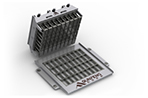
Wire cutting and carbonitriding or similar treatments provide accuracy and increased surface hardness, respectively. Evaluate the mold steel, tolerances, components, service, and lead time.
Output changes significantly according to product size and pieces per pallet.
Product | Reference Size | Pcs./Pallet | Approx. Pcs./Hour |
Standard brick | 240 × 115 × 53 mm | 20 | 5,100–6,000 |
Rectangular paver | 200 × 100 × 60 mm | 10 | 1,600–1,800 |
Small paving block | 225 × 112.5 × 60 mm | 10 | 1,600–1,800 |
Hollow block | 390 × 140 × 190 mm | 4 | 800–900 |
Large hollow block | 400 × 200 × 200 mm | 3 | 600–700 |
Actual output depends on mix consistency, feeding, pallets, downtime, and curing.
A Concrete Hollow Block Making Machine may process cement, sand, stone powder, crushed stone, fly ash, slag, and properly processed construction waste.
Alternative materials may reduce cost but change moisture, vibration, demolding, strength, and water absorption. Before large-scale production, the local mix should be tested for:
• Product dimensions
• Surface and edge quality
• Compressive strength
• Water absorption
• Demolding stability

As a manufacturer of Concrete Hollow Block Making Machines, Qunfeng designs compact production systems (QF400) based on factory dimensions, block specifications, raw material characteristics, required production capacity, and the desired level of automation.
Project support includes:
• Designing and building custom molds
• The design and setup of feeding, vibration, hydraulics, and pallet systems
• Installation and operation assistance
• Adjustment of process parameters
• User training for maintenance
• Designing systems to accommodate future automation
The design for the Concrete Hollow Block Making Machine should be considered the true demand for the blocks, the available factory space, the workforce and electrical capacity, product variety and the budget. Send Qunfeng your preferred block size, raw materials, target daily production, factory size and desired automation. A real operating scenario for your business will be considered by the Qunfeng technical team to design the Concrete Hollow Block Making Machine and the configuration of molds and layout of production systems.
Q1. What can be made using a Qunfeng Concrete Hollow Block Making Machine?
Hollow blocks, solid bricks, paving blocks, curbstones, bricks, and various decorative concrete products can be made using this machine by just changing the molds.
Q2. Can small businesses use Qunfeng's compact block machine?
Definitely. The machine's compact design and low power consumption, coupled with a streamlined hydraulic system and adaptable mold system, mean it's perfect for small businesses and small to medium-size concrete product factories.
Q3. What is the range of product heights this machine can accommodate?
This machine can accommodate products in the range of 50 mm to 250 mm, like paving blocks, standard bricks, hollow blocks, and curbstones.
Q4. What is the molding cycle for the Qunfeng machine?
The molding cycle is generally around 12 to 25 seconds. The actual cycle varies based on the size of the block, the design of the mold, the mix of raw materials, moisture content, and the level of compaction desired.
Q5. What is the power requirement for the Qunfeng Concrete Hollow Block Making Machine?
The compact design has a rough total power requirement of 21.45 kW. The buyer must also consider the power requirement for the ancillary equipment, like mixers and conveyors.