Author: Site Editor Publish Time: 2026-03-23 Origin: Site
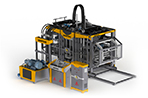
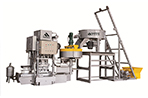
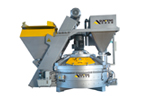
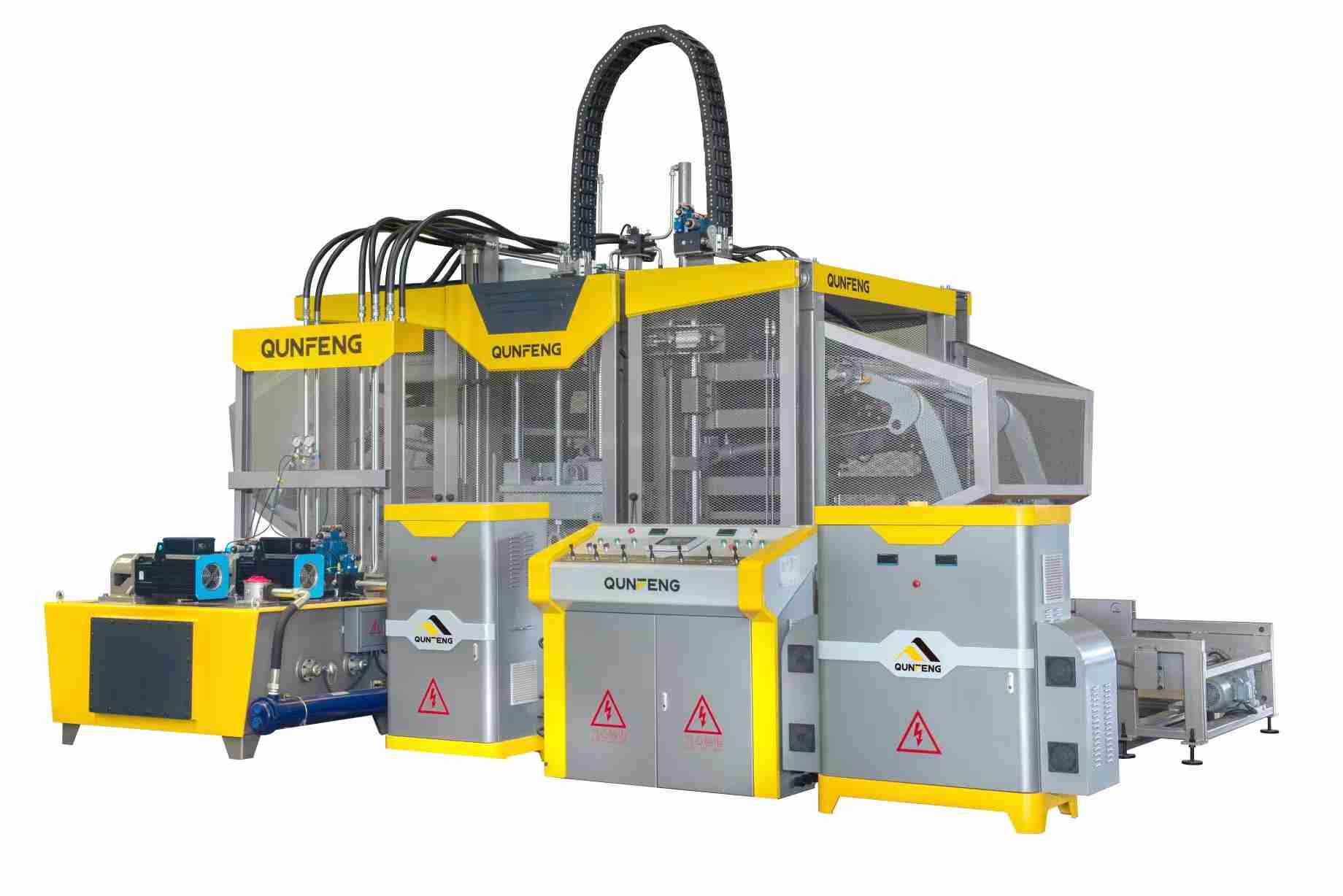
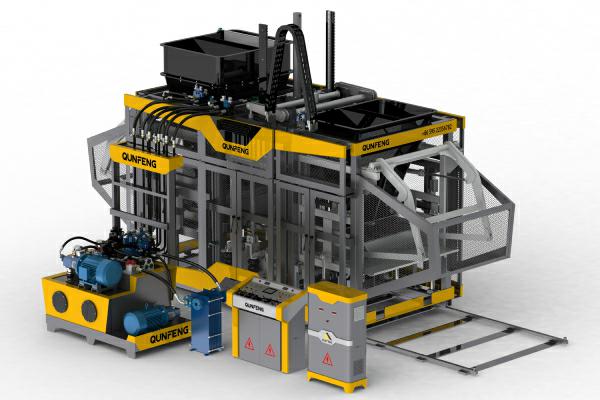
Small Scale Blocks Making Machine selection is no longer only about daily output. For many overseas buyers, the bigger concern is whether one machine can keep dimensions accurate, density uniform, and surface quality consistent across different concrete products while reducing waste, mold wear, and manual adjustment. This matters even more as producers move into higher-value pavers, curbstones, and landscape units. QUNFENG addresses this need with the QS2000 through servo-driven vibration, closed-loop synchronization, Siemens PLC control, and a heavy-duty damping structure built for stable, high-precision production.

In many markets, product quality is now closely tied to profitability.
When concrete products show unstable height, weak edges, color bleeding, or inconsistent compaction, the result is not only a technical defect. This could also mean:
• Increased rejection rates
• An increase in pallet rework
• Loss of customer confidence
• Increased stress on molds
• Poorer performance on quality premium paving projects
This is especially true for smaller and medium sized plants. A machine may have enough nominal output, but if finished products require too much sorting or correction, actual profitability drops. That is why precision is no longer a secondary feature. It has become a core purchasing standard.
If this version of the article focuses on one standout capability, it should be closed-loop precision control.
According to QUNFENG, the QS2000 achieves a product height tolerance of ±0.5 mm due to the combination of high-resolution linear encoders, four-axis servo synchronization, and proportional hydraulic valve technology. That is a meaningful point for buyers producing pavers and other appearance-sensitive concrete products, because dimensional consistency directly influences laying performance, visual finish, and acceptance on site.
What makes this more relevant today is that it aligns with broader industrial manufacturing trends. Siemens describes closed-loop control and digital twin technology as systems that use real-time sensor and actuator data to adjust performance and maintain desired operating conditions. In manufacturing terms, that means better control, fewer unexpected deviations, and more stable process output.
For overseas buyers, that translates into a simple commercial message: QUNFENG is not only increasing speed. It is making high-speed production more controllable.
In block and paver production, consistency affects much more than appearance.
Machines employing more advanced control techniques allows manufacturers to improve:
• Dimensional Precision
Consistency in height and shape allows for better fitament and improved uniformity across each pallet.

• Stability in Density
Even compaction offers greater reliability in compressive performance along with more uniform edge formation in products where the structural quality is critical.
• Quality of the Surface Finish
QUNFENG promotes anti-mix color technology which offers greater color separation in landscape pavers and PC bricks, especially in decorative concrete applications, where margins are higher.
• Less Scrap
Machines that offer consistent dimensions and compaction will ultimately reduce the number of pieces that require rework or that are deemed unacceptable.
• Reduced Stress on Molds
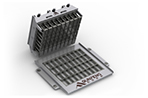
Improved coordination and controlled vibration result in less impact wear compared to less refined forming systems.
This is especially important when producers want to expand into more profitable product categories without purchasing an entirely separate line.
Some machines can offer fast cycles. Fewer can do that while protecting product consistency.
QUNFENG positions the QS2000 as its flagship "Supersonic" model, with a molding cycle of 15–23 seconds, a large 1400 × 1300 mm pallet, and a four-axis servo vibration system designed to support higher output. QUNFENG also states that this configuration can deliver 15%–20% higher output than standard servo machines.
The important point for procurement teams is that QUNFENG does not present speed as an isolated selling point. It ties speed to control through:
• Modular servo vibration
• Real-time synchronization
• Stable hydraulic response
• Digital recipe management
• Automatic fault diagnosis
That combined logic reflects where modern equipment design is moving. Siemens continues to position digital twin and smart manufacturing technologies as tools for optimizing production, improving flexibility, and reducing errors before they become more expensive operational problems.

Precision is not useful if the machine loses stability after months of heavy production.
That is why QUNFENG's heavy-duty damping design deserves attention in this theme as well. The QS2000 uses imported Michelin rubber shock pads together with airbag clamping to isolate vibration, reduce mechanical stress, and lower noise. According to QUNFENG, this structure helps extend machine and mold life while protecting the stability of the molding process itself.
For buyers, this is relevant because the long-term prediction is based on the durability of the structure. A machine may perform suitably during commissioning, but will not maintain sustained consistency without appropriate control of the vibrations, balanced force distribution, and controlled wear on the friction components.
The QS2000 has, as one of its many advantages, a dual-cylinder press head and a heavy-duty frame which assists this objective by creating and maintaining uniform molding pressure during the production of various types of blocks and throughout different production cycles.
Another reason this topic works well is that precision today is closely linked to data visibility.
QUNFENG's cloud-based AI diagnosis and automatic fault diagnosis features support a more proactive maintenance approach. That is increasingly relevant in industrial production, where predictive maintenance is used to identify developing issues before they cause serious downtime or process instability. IBM explains that predictive maintenance uses data and analytics to detect problems, improve reliability, and reduce operational risk.
For a concrete-products manufacturer, that means better control over:
• Machine condition
• Maintenance timing
• Uptime planning
• Quality consistency across longer production runs
This is one of the clearest ways QUNFENG's technology follows current factory trends. The company is not only selling a machine with strong mechanics. It is also moving toward a more data-driven production model.
A focus on precision and consistency gives the article a stronger commercial angle because it speaks directly to real purchasing outcomes.
Many buyers already expect a block machine to produce quickly. What they worry about more is whether that machine can help them:
• Win higher-value paving and infrastructure orders
• Reduce rejection and manual correction
• Protect mold life
• Maintain product uniformity at higher speeds
• Support future digital factory management
That is why this theme presents QUNFENG in a more competitive way. The QS2000 is not just a fast Small Scale Blocks Making Machine. It is a more intelligent precision-forming platform built for manufacturers that want stable quality, tighter tolerances, and stronger long-term production control. With servo synchronization, Siemens-based modular control, predictive diagnostics, and advanced vibration isolation, QUNFENG shows that its technology is aligned with the real direction of modern concrete manufacturing: faster output, better consistency, and smarter process management in one system.