Author: Site Editor Publish Time: 2025-12-25 Origin: Site
Vibration Block Machine technology has become a core investment for concrete plants that want stronger, more uniform blocks without letting labor and energy costs get out of control. As contractors tighten their requirements on strength, tolerances, and lead time, the way your plant creates and controls vibration will either support profitable growth or slowly eat into your margins.

Concrete producers now supply wall blocks, pavers, and curbstones to demanding residential, commercial, and municipal projects. Each batch is expected to meet strict strength and dimensional standards, with every pallet looking as clean and consistent as the last.
In this setting, the Vibration Block Machine is not just another piece of equipment; it is the heart of the forming process. Vibration governs how aggregates interlock, how cement paste flows and hydrates inside the mold, and how clean the edges look after demolding. Poor or inconsistent vibration leaves you with hidden voids, weak corners, and chipped faces. A well-designed, stable vibration system, by contrast, produces compact, repeatable blocks even when raw materials fluctuate.
Choosing the right Vibration Block Machine is therefore a long-term strategic decision, not just a short-term way to add capacity.
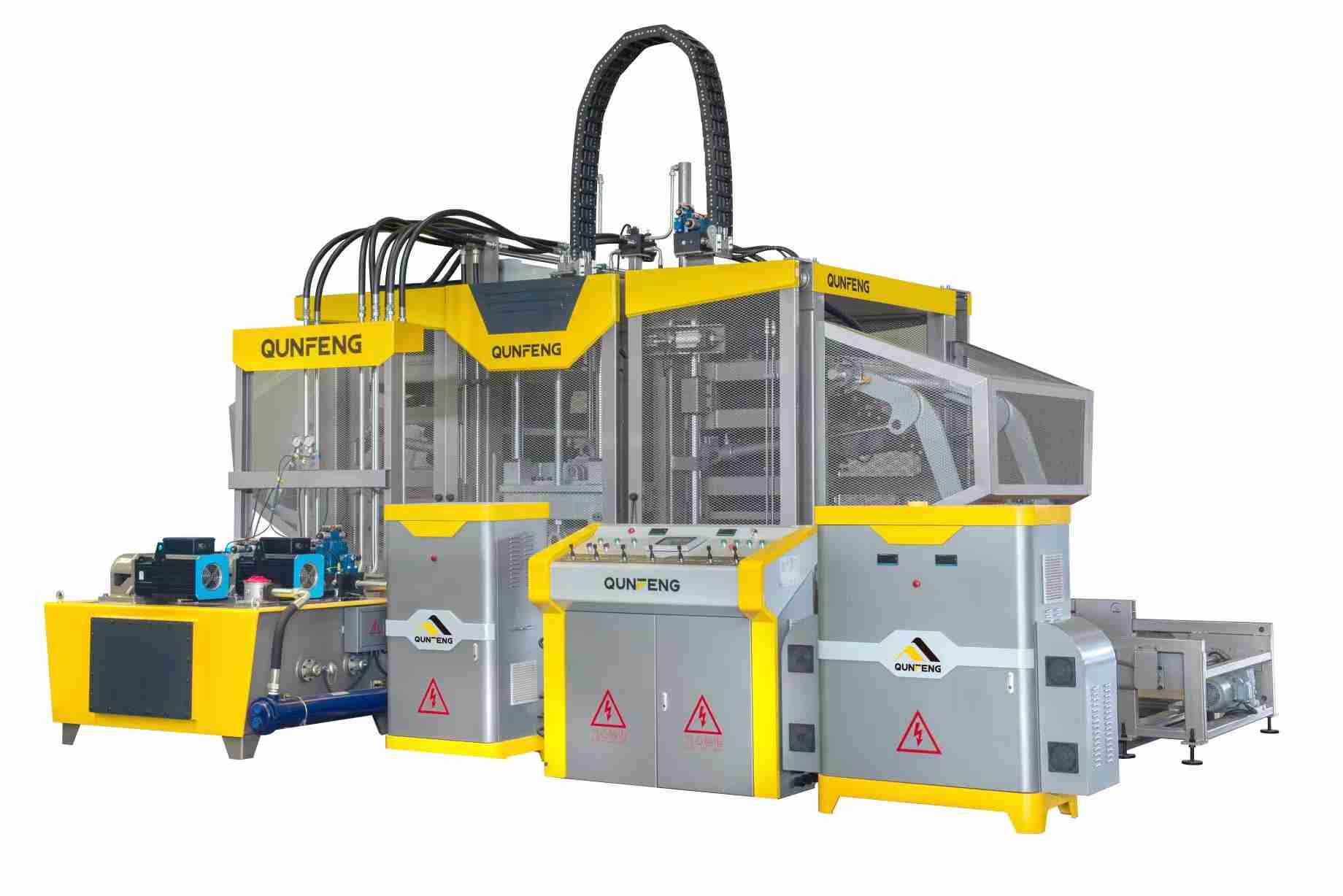
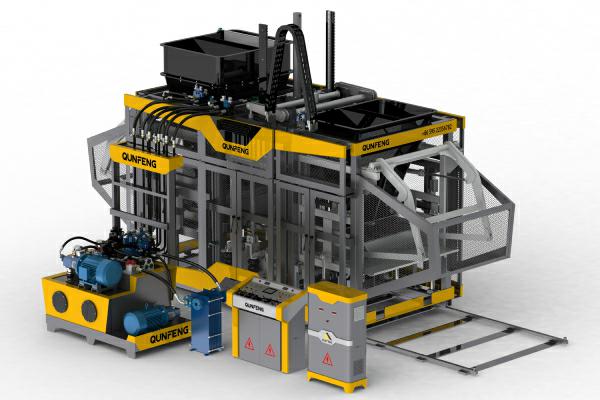
A Vibration Block Machine is a concrete forming unit that uses controlled vibration energy to compact fresh concrete, instead of relying only on static mechanical pressure. Fresh mix is fed into the mold, vibration starts at a defined frequency and amplitude, and the block is demolded once the required density and green strength are reached.
Compared with simple pressing, vibration-based forming can:
• Drive particles into corners and thin webs more effectively
• Expel trapped air, reducing internal voids
• Improve dimensional accuracy and edge sharpness
With a properly specified Vibration Block Machine, most plants can produce hollow blocks, solid blocks, pavers, and curbstones on the same platform, as long as the machine supports the needed height range and mold sets.
Every uniform block starts with a vibration system that runs smoothly and reliably, cycle after cycle. A well-engineered Vibration Block Machine brings together several critical components:
• High-performance vibration motors or shafts
These units supply the excitation force and must accelerate to speed and come to a stop in a very short time. Variable-frequency drives are commonly used to fine-tune speed, reduce power peaks, and match vibration to the product.
• Control of frequency and amplitude
Different product types respond best to different vibration "signatures." Thin pavers often run at higher frequency and moderate amplitude, while large hollow blocks need lower frequency with stronger amplitude to pack material deep into the core.
• Rigid frame and precise mold guidance
Whenever the frame bends or twists, vibration energy is lost before it reaches the product. Using a high-stiffness frame and accurately guided molds helps drive energy directly into the concrete, while also reducing the load on shafts, guides, and other moving elements.
• Synchronized feeding and demolding
Vibration must be coordinated with filling and mold lifting. Independent control of the hopper discharge, often via a geared motor, keeps filling consistent and helps achieve higher throughput with fewer manual corrections.
When evaluating any Vibration Block Machine, it is not enough to look at the installed kW. What matters is how the system integrates these elements, how easily vibration can be adjusted, and how the design prevents performance drift over years of operation.
n How Vibration Influences Block Quality?
Vibration is not a single "on/off" parameter; it shapes the internal structure of every unit that leaves your plant. Insufficient or uneven compaction may not be obvious during production, but can later show up as cracking, chipping, or premature water ingress on the job site.
A well-engineered Vibration Block Machine helps you achieve:
• Higher compaction density and compressive strength
• Smooth faces and crisp corners suitable for exposed, architectural use
• Fewer internal voids and weak planes that can cause failures
Equally important is consistency. Moisture content, aggregate grading, and cement quality all change over time. Recipe-based vibration control allows operators to adjust frequency, amplitude, and vibration time to keep quality within a tight window, instead of relying on one or two experienced workers "feeling" their way through each mix.

To run a Vibration Block Machine at high speed with repeatable quality, solid mechanics must be paired with smart control. Most modern Vibration Block Machine designs feature PLC controls, graphical touch screens, and often servo-actuated movements to align vibration, concrete feeding, pressing, and demolding in a tightly controlled routine. Operators select the desired product from a recipe library, and the controller automatically adjusts vibration strength, fill time, press pressure, and demold speed, which cuts reliance on manual "feel" and helps keep product quality stable on every shift.
Real-time monitoring is another advantage. If vibration frequency, amplitude, or cycle time drifts from the target, the system can trigger alarms or interlocks before quality is affected or components fail. Over time, this data lets plant managers refine settings for new mix designs, seasonal conditions, and new product lines.
ü Efficiency, Energy Use, and Wear
A productive Vibration Block Machine does not simply run "harder"; it delivers just enough energy, for just long enough, to reach the required density. Optimized vibration cycles shorten forming time while still ensuring full compaction. The result is more pallets per hour without pushing motors, hydraulics, or molds beyond their comfort zone.
Important levers for efficiency include:
• Product-specific vibration programs that avoid unnecessary seconds per cycle
• Energy-efficient drives, such as variable-frequency motors tuned to real demand
• Balanced vibration levels that protect molds, bearings, and frames from excessive stress
In many regions, electricity is now one of the largest operating costs in a block plant. A Vibration Block Machine that consumes fewer kWh per pallet creates a measurable advantage over its service life, especially in multi-shift operations.

ü Flexibility and Application Scenarios
Markets rarely stay still. A machine that can only make one basic gray block will quickly limit your growth. A flexible Vibration Block Machine is designed to handle a broad product mix with controlled changeover times.
With the right combination of molds and height range, a single machine can produce:
• Structural hollow blocks and partitions for residential buildings
• Solid blocks and paving units for commercial yards and pedestrian areas
• Curbstones and other municipal products for roads and public spaces
True flexibility also means that the machine can run very different concrete recipes - colored, textured, permeable - without losing stability. As demand shifts toward decorative façades, colored pavers, or green infrastructure products, a versatile Vibration Block Machine allows you to move into higher-value segments without replacing your core equipment.
ü Durability, Maintenance, and Long-Term Value
High-frequency vibration is a harsh environment for steel and bearings. In daily operation, bolts can back off, weld seams endure ongoing stress, and shafts operate under continuous dynamic loading. This is why a long-lasting Vibration Block Machine is designed not just to be strong, but also to be simple to maintain.

Shock-absorbing features in the demolding system help minimize impact forces. Reinforced frame areas reduce the risk of fatigue cracking. With service locations grouped logically and easy-open access doors, maintenance crews can perform lubrication, bolt checks, and wear-part changes in a short window. Such accessibility underpins effective preventive maintenance: systematic monitoring of bolt tension, bearing temperature, and motor condition helps avoid surprise breakdowns that might cost a full day’s production. When comparing offers, insist on seeing typical component life data, recommended maintenance cycles, and real-world operating results, rather than accepting unspecific assurances.
When you invest in a Vibration Block Machine, focus on lifecycle value instead of the lowest purchase price. Key questions to ask include:
• Capacity and product mix:
Does the machine cover your current and expected range of hollow blocks, solids, pavers, and curbstones?
• Vibration system design:
How easily can you adjust frequency and amplitude? Is the frame stiff enough for continuous service?
• Automation and expansion options:
Can you start with a semi-automatic layout and later add conveying, stacking, cubing, or packaging without replacing the core machine?
• Energy use and wear:
What is the expected kWh per pallet, and how does the design protect molds, bearings, and structural parts from premature wear?
Before signing a contract, share your planned product mix, material conditions, and shift structure with the supplier. Ask for a tailored configuration and clear numbers on throughput, energy consumption, and maintenance expectations - not just a generic brochure.
A well-chosen Vibration Block Machine becomes the stable heart of a modern block plant: it safeguards quality, keeps operating costs under control, and gives you enough flexibility to follow market trends for many years to come.