Author: Site Editor Publish Time: 2026-06-22 Origin: Site
The cycle time of automatic block making machines influences competitive edge in the construction materials space. It defines the daily production capacity of block making machines and influences costs of the production process and profitability. Traditional block making machines have long cycle times of between 15 to 25 seconds. In comparison, today's block making machines with servo technologies have significantly improved cycle times.

With today's designs and technologies, automatic block making machines can achieve cycle times of 10 to 18 seconds. This performance level is considered by most of the industry to represent "supersonic speed."
This article will consider the engineering technologies that have made high speed molding machines possible and the positive impact high speed machines have on a block manufacturing business.
In the manufacturing of blocks, cycle time refers to the total time consuming all of the processes involved in block making.
• Feeding: The materials required to make the block are fed into the mold.
• Vibration and Compaction: The materials in the mold are compacted through vibration.
• Demolding: The block is removed from the mold.
• Pallet Indexing: The pallet in which the mold is situated is moved forward to make space for the next cycle.
The shorter the cycle time, the fewer the number of cycles a block making machine executes in a given period which translates to a higher cost of production per block. Automatic block making machines are designed in such a way that every small second in cycle time translates to a higher number of blocks produced each day by the machine.
When a machine has a block cycle time between 10 and 18 seconds, it is one of the fastest machines in the industry. To help in the understanding of this benchmark, consider the following points:
• The industry standard for the production of hollow blocks is a cycle time of 15 to 20 seconds.
• For semi-automatic machines, the cycle time is longer if time for manual loading and unloading is considered.
• Fully automatic machines: Have shorter cycle times and less waiting time between operations.
Taking into consideration the points above, the advancement from the 20-second cycle time to systems that operate in the 10 to 18 seconds cycle time is a major advance based on fully automatic systems. Speed in the molding process is achieved with the elimination of waiting time and the integration of control systems, electro-hydraulic systems, and soft/hard automation that work together.
What makes these machines the fastest in the market is the incorporation of advanced servo-driven systems with rapid and precise control of the dynamic response of the system. With traditional systems, motors take time to go from rest to full operation and back. Systems with servo-driven technology do not take this time.
The adaptation of the 0 to 75 Hz range of vibration frequency allows the machine to vary the vibration to suit different block types.

Speed without accuracy is useless in block manufacturing. New electro-hydraulic integration technologies have moved to the rapid and smooth area. This combination yields positive results for production. Consider the following:
• Quick Dynamics Responsiveness: The response delay of the hydraulic and electronic control signal is almost negligible.
• Movement Precision: Example of movements requiring precision includes the application of pressure and closure of the mold.
• Quality of Repetition: The ability to reproduce movements precisely results in blocks of the same density and dimensions.
The cycle time of a fully automatic block making machine is determined by the control system. Automation via a PLC has offered a cycle time advantage of over 15 percent when compared to a manually operated machine. These advantages translate into a greater production capacity, the output of an automated control system is believed to be approximately 300 pieces in an hour.
Modern PLC systems control the entirety of the production process as follows:
• Synchronization of operations: Programmable control elements synchronize the feeding, vibration and demolding systems.
• Digital recipe memory: The controller has the programmable material ratio; therefore, human error is eliminated, and the quality is unalterably consistent.
• Real-time monitoring: Problems are instantly recognized, and operators are suggested solutions.
Fast cycle times are made possible by the efficient control of the power curve. The starting logic is intelligent, and the motor is protected, while a rapid control response is assured. The system is designed to ensure that the machine is ready for the subsequent cycle with no delay and no energy is wasted.

A machine's ability to produce blocks rapidly can raise concerns over the quality of blocks. These concerns are answered by the modern systems' engineering.
• Compaction and vibration frequency: As the vibration frequency increases, so does the block density. The best compaction of block making machines is achieved when the vibration frequency is in the range of 75 Hz – 90 Hz. Modern machines are capable of ensuring that even with the highest cycle speed, not only the best compaction is achieved, but also the density target.
• Vibrations and packings: With the high pressures (21 MPa) of material packings and fast forming, the state of the compacted blocks (which range in density) is also determined by the speed with which the block forming is carried out.
• Quality consistency: Variability from manual operations is eliminated through automation. Increasing the speed of production through automation decreases the material waste and enhances the quality of the product.
A commercial block production facility would see significant impacts from an 18-second cycle versus a 25-second cycle. A quick calculation shows why:
• In an hour, a cycle time of 18 seconds would produce about 200 cycles.
• There would only be a total of 144 cycles with a 25 second cycle time.
• This equates to an additional 56 cycles every hour and hundreds of extra cycles every shift.
When considering pallet sizes that allow for many (e.g. 54 Standard Bricks) pallets of blocks to be produced in a cycle, the benefits multiply.
The modern automatic block making machine with a 10-18 second cycle time also provides additional business benefits:
• Reduced Labor Costs - Less reliance on manual labor
• Decreased Energy Usage - Servo systems reduce energy used per block
• Decreased Footprint - High output machines take up less space
• Reduced Changeover Time - Quick Change systems allow for less time to switch to a different product
The 10-18 second cycle time of modern automatic block making machines demonstrates what is now possible with block production by marrying technologies like servo-driven vibration and electro-hydraulic synchronization with smart automation to offer a production paradigm of high production speeds and high quality block output.
Want to take advantage of having block making machines that provide 10–18 second cycle times?
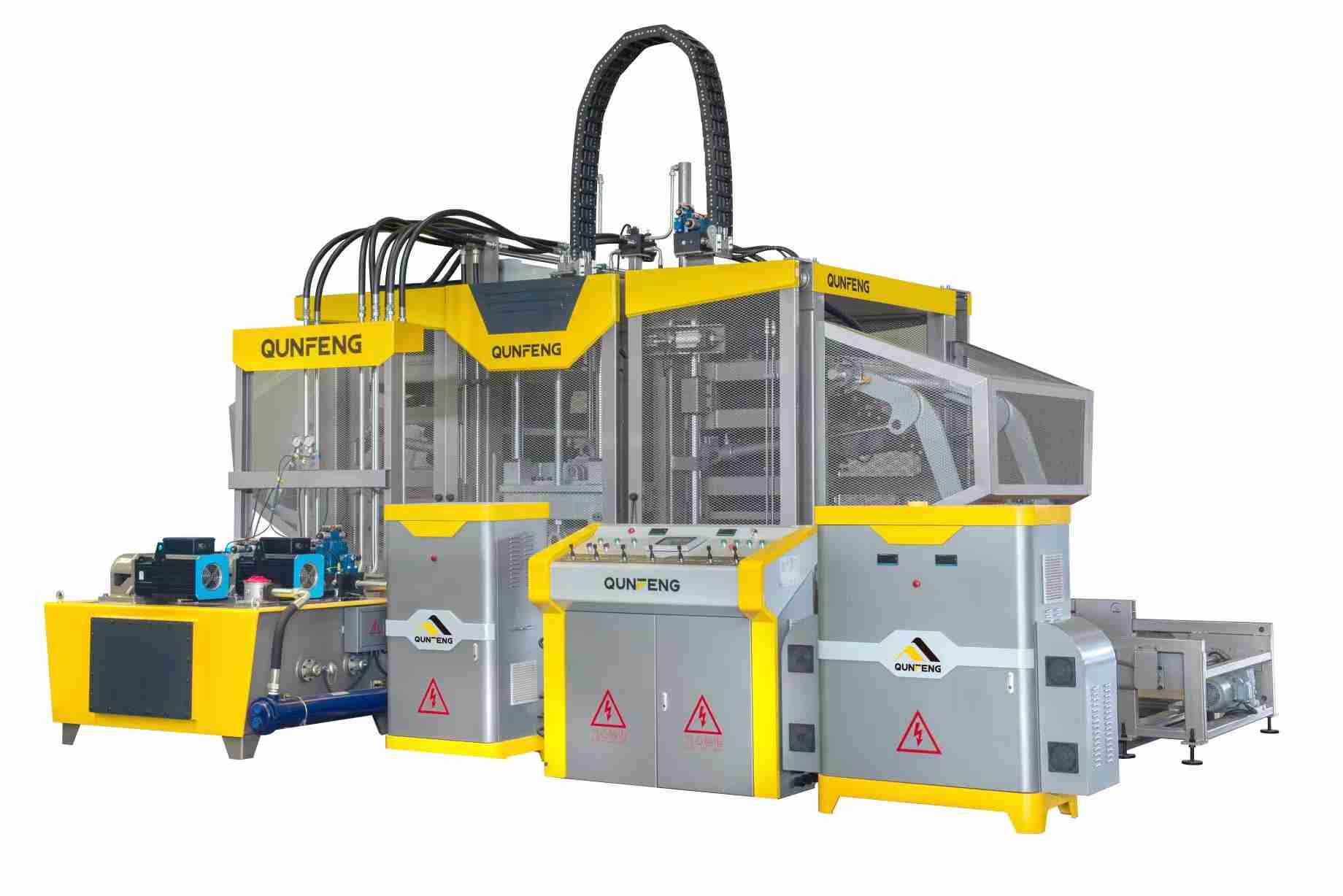
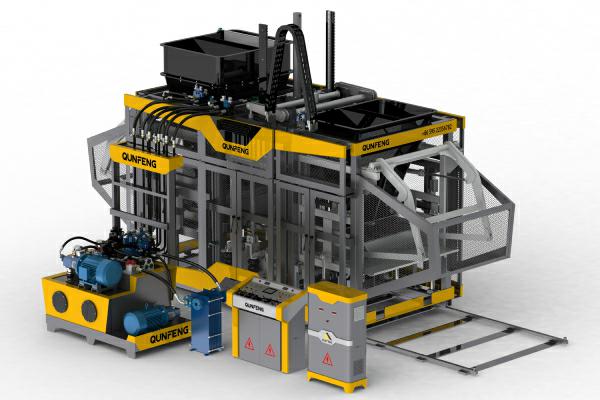
QUNFENG's machines enhance speed with our patented servo technology, Siemens PLCs, and responsive electro-hydraulics while maintaining block density and durability. Whether you're producing large scale commercial block or Sponge City permeable pavers, our systems utilize artificial intelligence with remote diagnostics to maximize efficiency and output.
Contact QUNFENG for a free production assessment. Discover the benefits of our machines and technology for a better return on investment. Performance analyses incur no cost to you.
Q1. Does a faster cycle time reduce block density?
No, 0–75 Hz servo-driven vibration coupled with 21 MPa hydraulic pressure enables effective compaction at a 10-second cycle time.
Q2. How adaptable is the machine to different raw materials
Digital recipes, enabled by PLC storage, will select the appropriate vibration and pressure settings for various mixes, such as fly ash, slag, and recycled aggregates.
Q3. Is it capable of producing permeable pavers for the Sponge City initiative?
Yes, it is capable of producing high-porosity pavers that conform to the 2026 IKN international drainage standards.
Q4. How reliable are the components?
Heat-treated molds and hardened guide pillars have a 5 million cycle lifespan with no degradation of precision.
Q5. What is the order quantity for customized products?
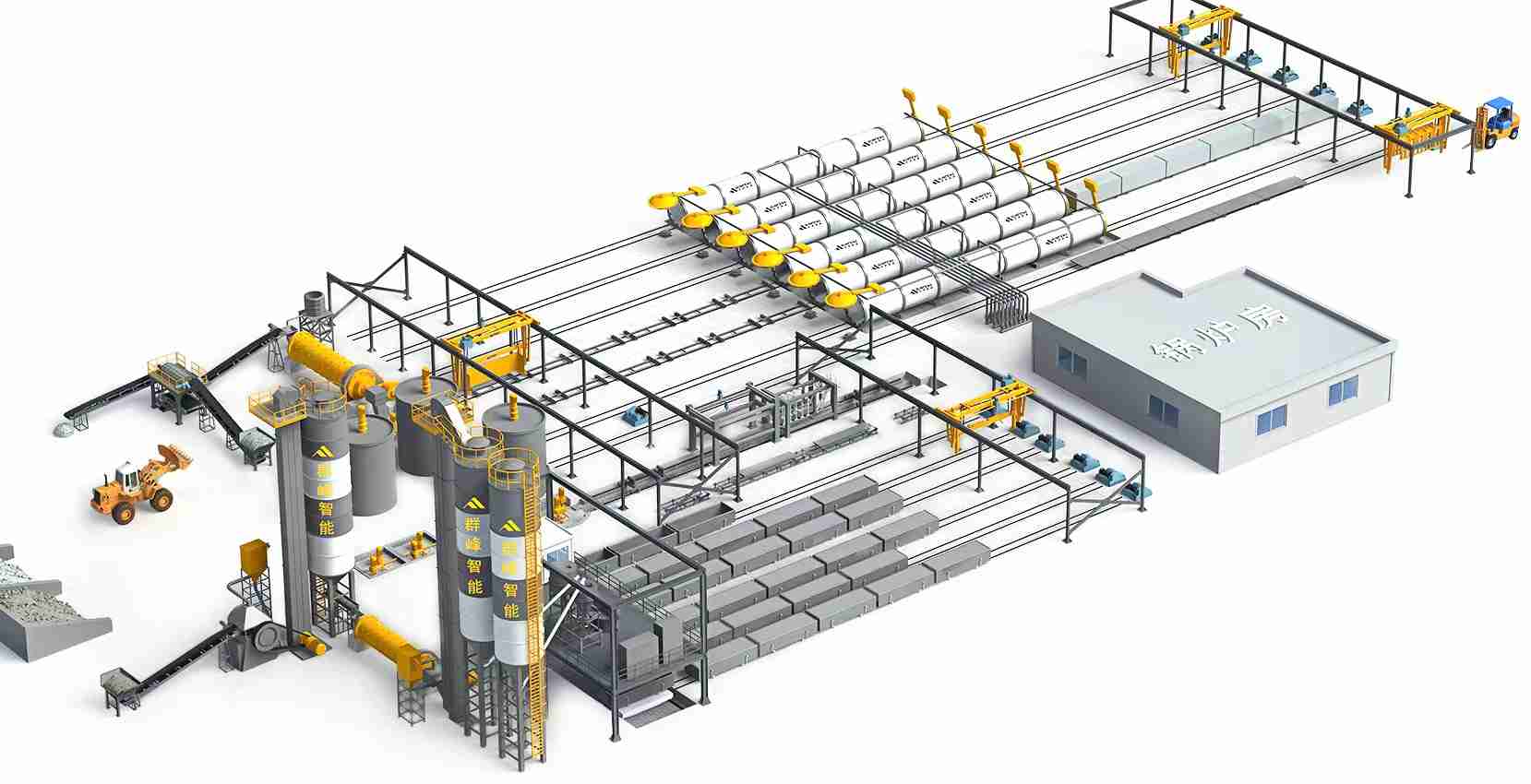
Single units to fully automated production lines can be custom designed and built to your specifications.