Author: Site Editor Publish Time: 2026-05-18 Origin: Site
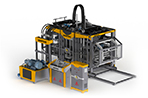
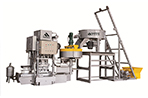
A Block Machine for Fly Ash Bricks is a unique machine that is capable of producing Fly Ash brick blocks. Fly Ash is a waste powder that is generated in bulk due to the combustion of coal to produce energy in thermal power plants. Other raw materials like cement, aggregates, and water are needed to complete the production of Fly Ash bricks. The equipment is fundamental for the development of the field of sustainable construction. It utilizes fly ash, which is waste material, and converts it into a valuable source for building residential, commercial, and industrial infrastructures worldwide
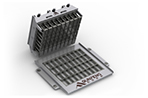
Construction can be done using clay bricks; clay kilns operate by using the top layer of soil in the layers of construction, resulting in a significant carbon footprint. The machines used in constructing Fly Ash bricks are built to operate using the principles of a circular economy, scaling industrial waste to commercial use tools. The machine can create hollow blocks, pavers, and the like with only a change of the mechanical molds.
A fast-growing market is generating fly ash bricks (4.53% CAGR to USD 905.6 million by 2034), due to the increase in the cost of cement, more stringent regulations on recycled materials, rapid urban development, green building initiatives, and cheap sources of fly ash.
When choosing machines, knowing the machine types helps match buyer preferences to the respective equipment.
1) Fully Automatic Systems
The best type for large industries producing over 10, 000 bricks daily.
• Main traits: PLC-based central processing units, servo vibration features, raw materials prep, changes in molds and pallets of blocks, all achieved by machines.
• Number of operators: 1 to 2 personnel for a workday.
• Its Precision: With the PLC controller, it guarantees production.
2) Semi-Automatic Systems
The best type for mid to small sized enterprises and startups which budgets are moderately limited.
• Features: The system uses automated molding and vibration cycles. Users provide material, and then remove blocks manually.
• Labor requirement: Average. Most shifts have 3 to 5 staff members.
• Flexibility advantage: You spend less initially and the machine produces uniform bricks.
3) Mobile Brick Making Solutions
• Best for: Construction projects that are located far away or sites that are not accessible for transporting bricks.
• Features: Completely transportable design that is compact and trailer-mounted, this solution is flexible to the changes of a project.
• Labor requirement: Minimal. Simple, basic training.
• Flexibility advantage: As bricks are made on site, the often costly transportation is saved.

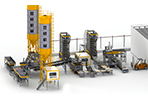
Though the machines differ widely in design and cost, the general production process remains similar.
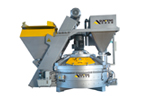
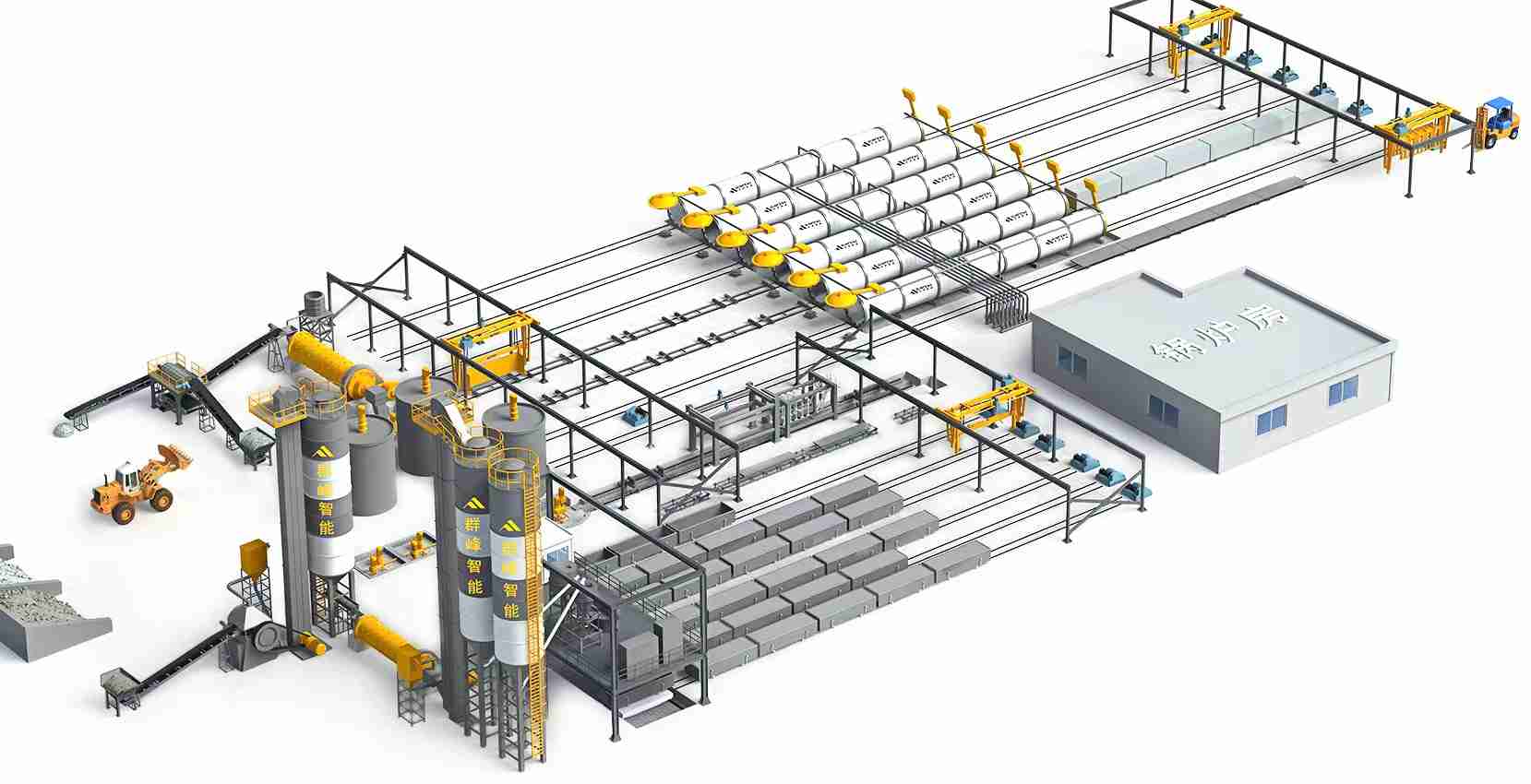
Step 1 – Batching and mixing: The machine's batching unit dispenses proportioned units of fly ash, cement, sand or stone powder, and water. The mixture is then blended in a forced action pan or twin shaft mixer.
Step 2 – Molding and compaction: The mixture is cast into cavity of the mold. The machine is then used to compact the mixture evenly by applying high-frequency vibration (generally in the range of 0 to 75 Hz) and hydraulic pressure.
Step 3 – Demolding and curing: From the mold, bricks are released to a steel or plywood pallet. The bricks are then move to the curing area where the process of hydration is completed and the bricks attain their full strength.
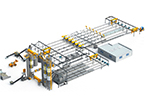
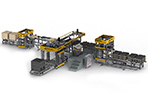
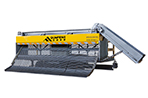
Step 4 - Stacking and Packaging: In completely automated production lines, finished bricks are organized into transportable cubes, packaged for shipment or storage, by a robot or a mechanical stacker.
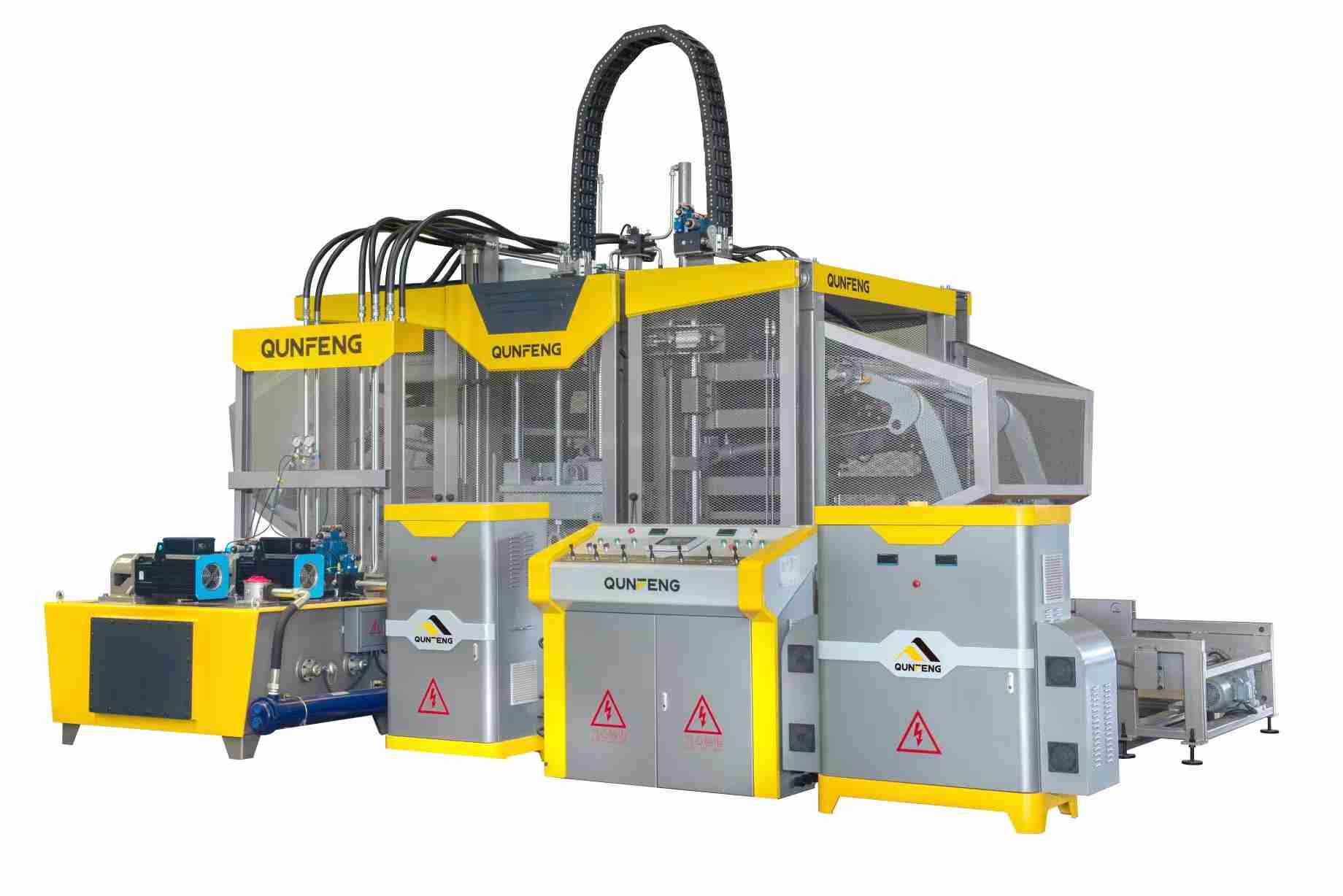
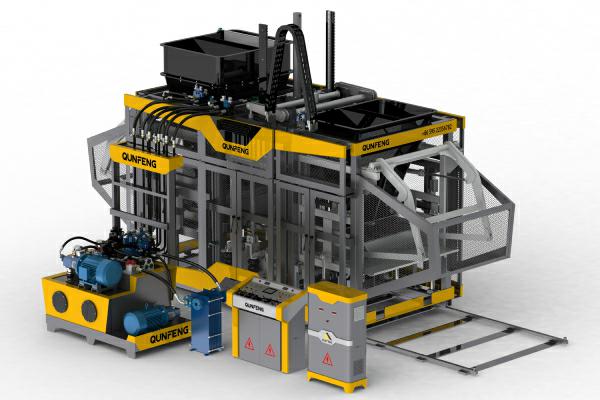
For more than 30 years QUNFENG has been designing fully automated block production lines in the Americas, the Middle East, and Africa and Europe. Their products, the QS series (models QS700, QS1300, and QS1800), have a robust understanding of the features in demand by overseas clients in 2026. These features include production consistency in the face of varied raw materials, ease of operations, and evident pathways for meeting emerging sustainability requirements.
For uniform density, the system is designed and built. QUNFENG's forced feeding system with the 360° rotating rake system eliminates and prevents the arching of material, enabling the mixture to be consistently placed within the mold. With this solution, density and surface finish are no longer a problem.
The right system of vibration for compaction is achieved. With high-frequency, 2-D, two-axis, and servo vibration, QUNFENG bricks provide an even density and surface finish ready for edges and seals. It also allows the manufacturer to preset the frequency and working parameters of the system (within 0–75 Hz) and the vibration within the foreseen limits based on the final product and the composition of the mixture.
Intelligent hydraulics with prompt action. The double pump system helps to achieve smooth and quick circulation, which in turn quickens the cycle. The use of airbags for clamping helps to eliminate the vibration of the frame, thereby protecting the structure of the operator of the machine.
To reduce errors, centralized PLC control utilizes Siemens controllers where recipes and parameters are stored for each material, eliminating the reliance on a specific person. Onboarding new staff will not impact the quality of work.
Many of the largest producers of fly ash brick machines are household names around the world. Based on available industry studies, the leading companies in the automatic fly ash brick making machine industry are LONTTO, ENDEAVOUR-i, Benny Industries, ANECO, and Q Green Techcon.
As per the latest rankings for global brick machine manufacturers, QUNFENG is in a league of its own, with QGM Quangong, Simec Group, and Haomei Machinery. For these and other manufacturers, it is critical to have a supplier in this peer group. It confirms the contractor's engineering capabilities, a commitment to quality, and a global network for services.
Among manufacturers, the appeal of fly ash bricks compared to pure cement blocks is growing for a number of reasons, starting with the cost:
• Significantly less cost of raw materials: Fly ash bricks can be made with a 60-80% fly ash content, which dramatically reduces the amount of cement used. In many places, a 50 kg bag of cement costs $4-5. Substituting 60% of the cement with low-cost or even free fly ash provides great savings of several dollars per thousand bricks.
• Reduced costs of mortar and plaster: Machine made fly ash bricks have a surface finish and dimensional characteristics that allow for a reduction of 25% of mortar, compared to conventional clay bricks. This results in savings of both the material and labor costs.
• Reduced freight costs: Fly ash bricks are considerably lighter than typical concrete and clay bricks. This ultimately means freight costs will be lower.
• Combat Global Warming: The introduction of Carbon Pricing and Emissions Reduction Mandates will force Cement producers, particularly in Europe, to adapt. Fly ash formulations will be comparatively cheaper as Cement pricing rises.

Depending on the shifts in the market outlined below, buyers will have to make key decisions in 2026 about the block machines for fly ash bricks.
• The expected new normal will be complete automation. Demand for fully automated brick making machines with high throughput capabilities will increase along with the continuous pursuit of product uniformity.
• Raw materials in flux. Changing design and construction practices through the use of building waste and industrial by-products will also introduce new Machine design implications.
• Predictive maintenance and the IoT are now standard offerings. Integrated health monitoring and smart diagnostics will lead to decreased unplanned obsolescence and extended operating life of the machine.
• Enhanced mobility in brick making is growing. On-site production capabilities for remote locations are becoming a the norm when transporting completed bricks becomes impractical
• Sustainability is the new procurement driver. From 2026, companies will stipulate green building design and building certifications as a core requirement for job bidding. Compliance with evolving regulations will also impact the procurement process.
The investment process for a block machine for fly ash bricks has become more methodical and prudent than it was previously. Buyers are inquiring about density, consistency, product changeover time, and the overall cost of ownership. With QUNFENG, the answer is found in precise control of feeding and vibration, and smart automation, adjusting to actual market conditions. That means more productive operations with fewer scrapped bricks.
Sustainable materials are here to stay, and efficient equipment will command a premium.
Q: Fly ash bricks made from block machines have a minimum output of how many bricks?
A: Different machines offer different outputs. Small semi-automatic machines have
an output of 2,000-3,000 bricks for each production shift. Fully automatic machines would have an output of 10,000-20,000 bricks for each production shift.
Q: Can one machine produce different types of bricks?
A: Yes. All you need to do is to change the mold set. That includes everything from hollow blocks to solid bricks to different kinds of pavers to interlocking tiles.
Q: Is it safe to use fly ash to produce construction bricks?
A: Yes it is. For bricks used in construction, Class C or Class F fly ash mixed with proper proportions of cement and water produce bricks of the required or even
higher standard of construction.
Q: How much cement can be replaced with fly ash?
A: Cement content to be replaced with fly ash can be around 60-80%, which will reduce the cost of the raw materials significantly.
Q: Does QUNFENG provide overseas installation?
A: Yes, QUNFENG provides training, spare parts and remote diagnosis for international customers.