Author: Site Editor Publish Time: 2026-06-24 Origin: Site
For centuries, mortar has been the universal binder in masonry construction. However, a quiet revolution is reshaping the building industry. The interlocking block machine now produces concrete units that lock together mechanically through precision-engineered tongue-and-groove profiles – completely eliminating the need for mortar. This article will look at the structural advantages of the technology along with the science behind the manufacturing methods.

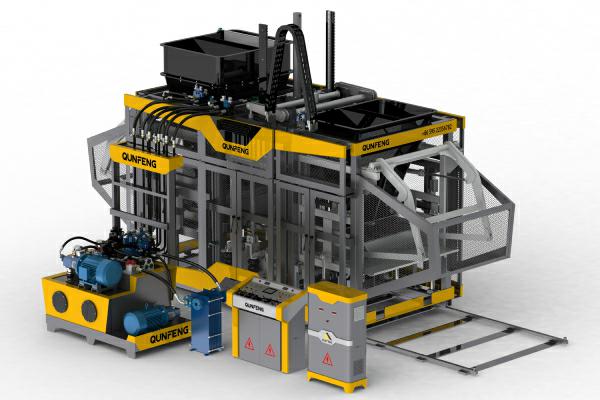
An interlocking block machine is a specialised manufacturing system that forms concrete or soil-cement blocks with integral male and female connecting features. Unlike conventional block makers, this equipment creates blocks that:
• Stack vertically without adhesive, relying on mechanical keys.
• Align themselves through self-guiding inclined surfaces.
• Transfer loads directly through the block geometry, not through a binding layer.
In essence, the interlocking block machine turns loose aggregate into a self-assembling construction system – reducing material waste and accelerating on-site erection.
The core innovation lies in the block's geometry. Every unit produced by an interlocking block machine incorporates two complementary locking systems:
• The central rib of the block protrudes beyond the side walls at one end, forming a male tongue.
• The opposite end is recessed to create a female groove of identical dimensions.
• When placed side-by-side, the tongue of one block slides snugly into the groove of the next.
• A second tongue rises above the top surface of the block, while the underside carries a matching recess.
• This ensures that each course locks into the one below, preventing lateral displacement.
• Both horizontal and vertical surfaces are mutually inclined, so the tongues guide themselves smoothly into their corresponding grooves during assembly – requiring zero precision adjustment from the mason.
This dual-axis locking mechanism is what makes the interlocking block machine so revolutionary: it replaces manual skill with engineered precision.
Traditional masonry uses mortar for three purposes: filling gaps, compensating for dimensional variations, and resisting shear forces. The interlocking block machine addresses all three at the source:
Modern interlocking block machines use rigid moulds and high-pressure compaction. Every block emerges with identical height, width, and profile – so gaps are minimal and consistent.

Compressive and tensile forces travel through the interlocking surfaces, not through a brittle mortar interface. This distributes stresses evenly across the entire wall panel.
The tongue-and-groove profiles inherently resist horizontal sliding. Even without mortar, the locked assembly behaves as a monolithic structure under lateral loads (wind, seismic activity).
As a result, construction with interlocking block machine products is faster, cleaner, and less dependent on skilled labour.
Producing blocks with micron-level interlocking geometry demands advanced manufacturing capabilities. A high-performance interlocking block machine must excel in four critical areas:
To eliminate voids and ensure consistent density, the machine must apply substantial static pressure – far beyond what vibration alone can deliver. This guarantees that each block's tongue and groove are perfectly formed.
Leading interlocking block machines now operate without production pallets. Blocks are formed directly on a steel table and ejected immediately. This reduces initial capital expenditure, simplifies logistics, and allows instant stacking – preserving the block's fresh-state geometry.
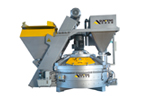
Uniform filling of the mould cavity is essential. Advanced interlocking block machines employ dual-motor systems that control front and rear material flow independently, ensuring each corner of the mould receives exactly the same volume of mix – thus guaranteeing consistent block weight and interlocking fidelity.
Utilizing hidden high-frequency vibrations paired with rotating blades, the interlocking block machine fills more evenly and more quickly with less noise than a filling machine with a standard design.
The quality of interlocking blocks hinges on the compaction method. While vibration-only machines are common, static pressing – as adopted by premium interlocking block machine manufacturers – offers distinct advantages:
Aspect | Static Pressing | Vibration Only |
Density | Higher, more uniform | Lower, with gradients |
Strength | Superior (early and final) | Moderate |
Surface finish | Smooth, sharp edges | Rougher |
Pallet-free stacking | Feasible (immediate) | Rarely feasible |
For an interlocking block machine, static pressing ensures:
• Immediate stackability – the block retains its exact dimensions without sagging.
• Versatility – the same machine can produce pavers, solid bricks, slope-protection units, clay bricks, and even dry-cast terrazzo tiles by simply changing moulds.
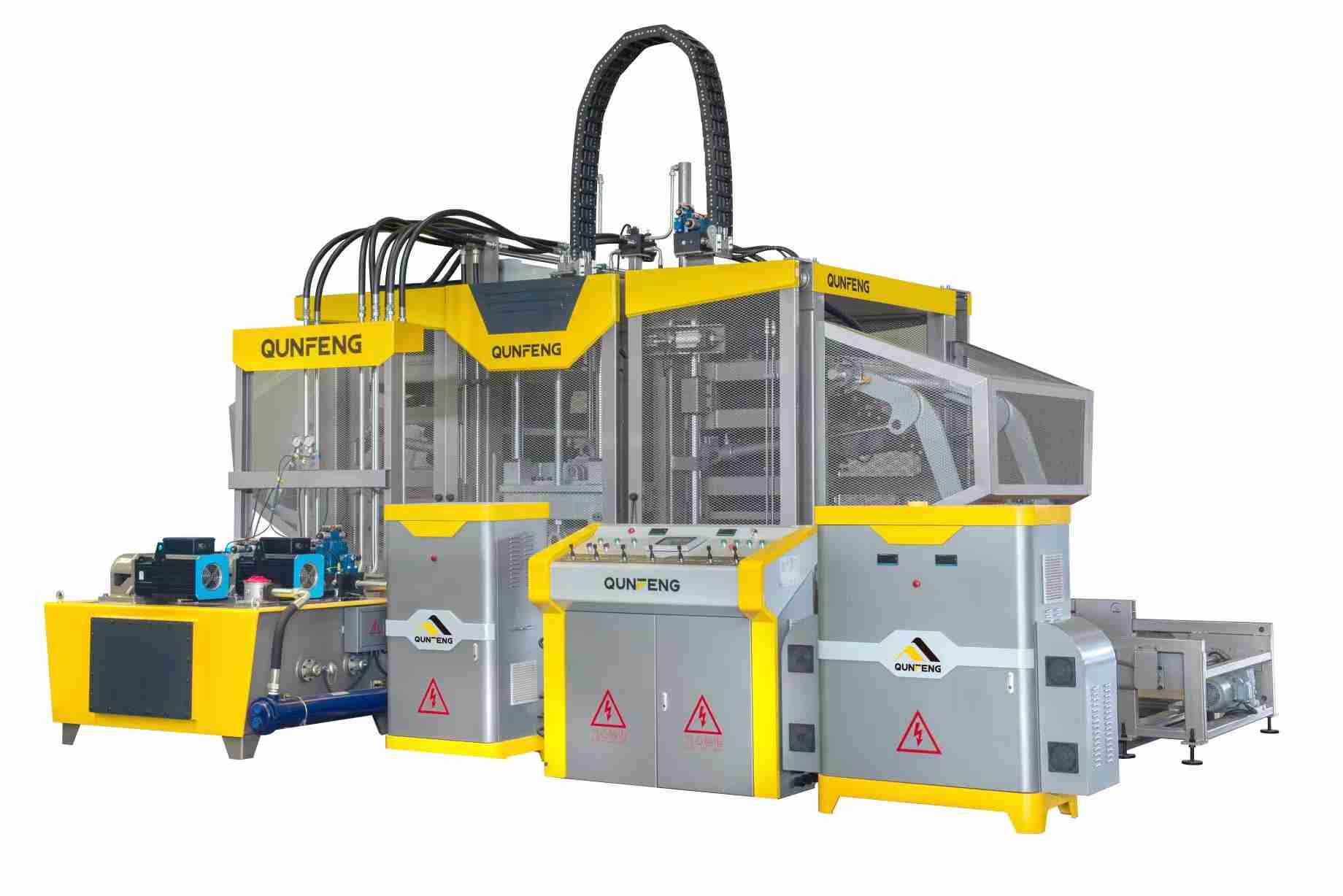
Among global equipment manufacturers, QUNFENG has distinguished itself by integrating these scientific principles into robust, energy-efficient interlocking block machine solutions. The company's engineering philosophy centres on:
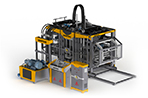
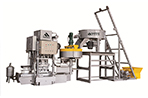
QUNFENG's hydraulic interlocking block machine line adopts fully automatic static press forming without pallets. This eliminates the recurring expense of pallet replacement and maintenance – directly boosting return on investment.
Delivering up to 800 tons (8000 kN) of main pressure, QUNFENG machines achieve exceptional block density. This high static force is particularly suited for high-value products like imitation stone bricks and terrazzo tiles, where surface finish and edge sharpness are paramount.
QUNFENG uses servo-controlled hydraulics in its interlocking block machine. Power output is adjusted in accordance with real-time load. Compared to traditional fixed-speed servo motors, power output adjustments help reduce power usage by about 30% and is an improvement over feeding accuracy, in addition, cycle times become more consistent.
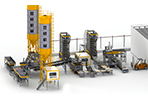
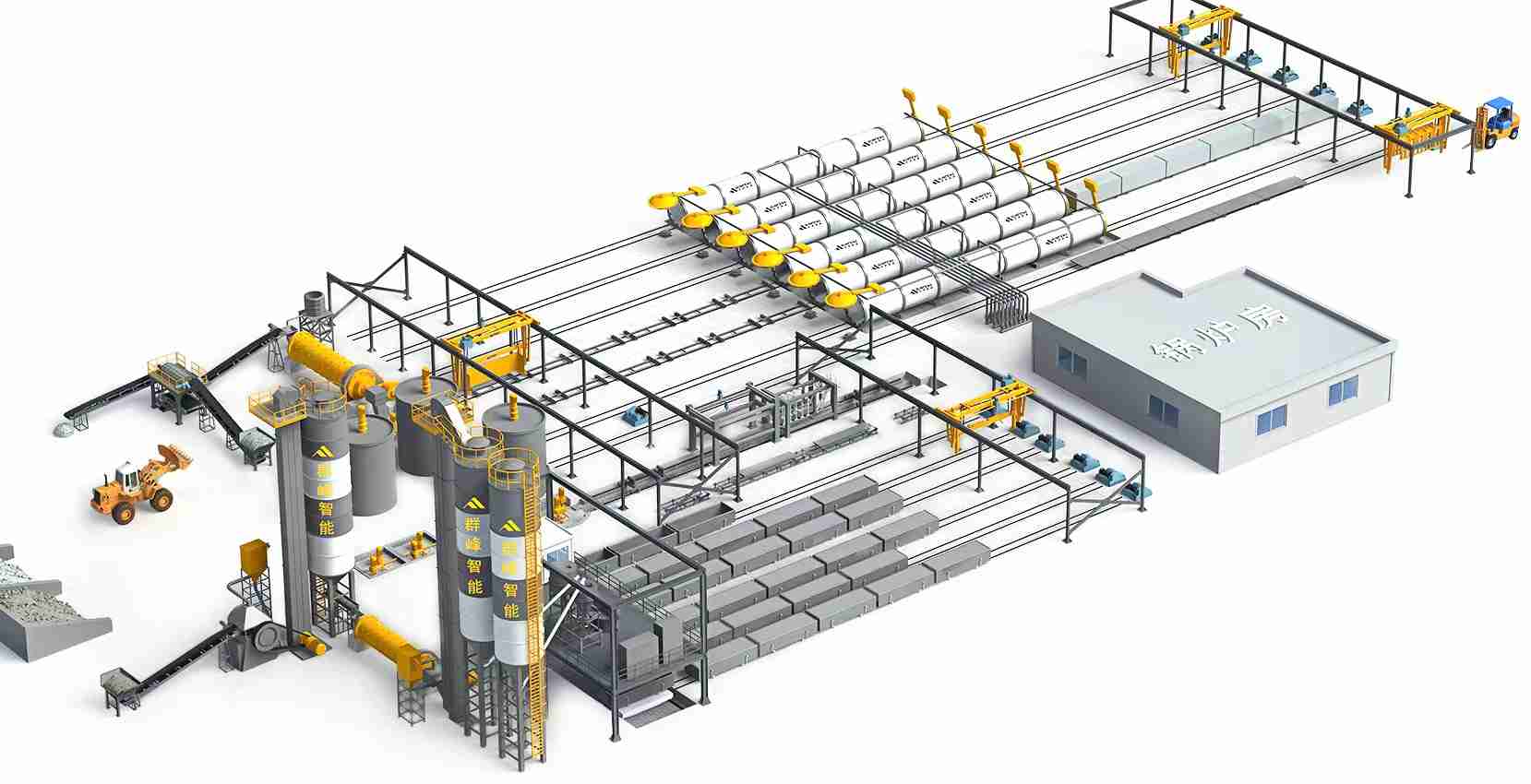
Total automation from the batching of raw materials to the ejection of finished blocks means human error is completely eliminated in interlocking geometry. Thus, each production cycle is able to meet the same parameters.
QUNFENG's block machine has the unique ability to easily switch between the production of standard building blocks, decorative pavement blocks, ecological slope protection blocks, and dry-cast terrazzo blocks. This allows manufacturers the ability to quickly respond to changing customer demands.
The design of today's interlocking block machines goes beyond the mechanical performance, it also reduces further operational costs and the impact on the environment.
As stated, intelligent servo systems achieve a ~30% reduction in electricity consumption, while not affecting speed of the cycle or the pressing force.

Adjustable motor speeds optimize energy consumption and extend the life of the equipment.
The precision of the interlocking block machine minimises reject rates, while the ability to use industrial by-products (fly ash, slag, recycled aggregates) supports circular economy principles.
These features make the modern interlocking block machine a cornerstone of green construction.
The concept of mortarless blocks dates back to early 20th-century patents, but early versions suffered from poor fit, difficult assembly, and insufficient structural contribution from the interlocking portions. Today's interlocking block machine has overcome these limitations through:
• Advanced hydraulic systems that deliver sustained, high-pressure compaction.
• Precision-ground moulds with wear-resistant coatings that maintain tight tolerances over millions of cycles.
• Computer-controlled material feeding that ensures every block has identical density and moisture content.
• Pallet-free handling that preserves the fresh block's integrity until it is cured.
As a result, structures built with interlocking block machine products now rival or exceed the strength and durability of conventional mortar-bound masonry – at a fraction of the construction time.
• Mortar-free technology has several benefits for builders and developers.
• Speed - Building walls is up to six times faster since there is no curing time.
• Labor Savings - Unskilled laborers can use interlocking blocks to build straight walls with significantly less need for highly skilled masons.
• Cost Savings - Savings on mortar and the costs associated with mixing and transporting mortar.
• Design Flexibility - Interlocking blocks may be left exposed to provide an aesthetically pleasing architectural finish, or may be covered with render.
• Disassembly and Reuse - The lack of mortar in these walls allows for easy disassembly and reuse of the blocks. This improves methods of deconstruction and circular building.
The interlocking block machine is a paradigm shift – eliminating mortar, speeding construction, and cutting costs. QUNFENG's static-pressing, pallet-free, servo-driven platforms produce precision interlocking blocks that will redefine sustainable building.
Q1. What is an interlocking block machine?
A machine that interlocks blocks creates mortar-free concrete blocks that use precision tongue-and-groove profiles that lock together.
Q2. How does an interlocking block machine remove the need for mortar?
Due to the interlocking male and female surfaces of the blocks, loads can transfer directly, which provides shear strength and stability without the need for any binding material.
Q3. What are the possible products of an interlocking block machine?
By changing the machine molds, the products of the machine can vary from pavers, bricks, and slope protection blocks, to clay bricks and even high-quality dry-cast terrazzo tiles.
Q4. What is pallet-free production in block machines?
Pallet-free production means that wooden pallets are no longer used in the production of blocks which simplifies the transportation process and lowers production costs.
Q5. Are the blocks created by this machine of high quality, strong, and durable?
Absolutely, due to the static pressing force of up to 800 tons, blocks made with the machine have high strength, density, and great early strength.